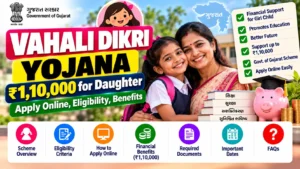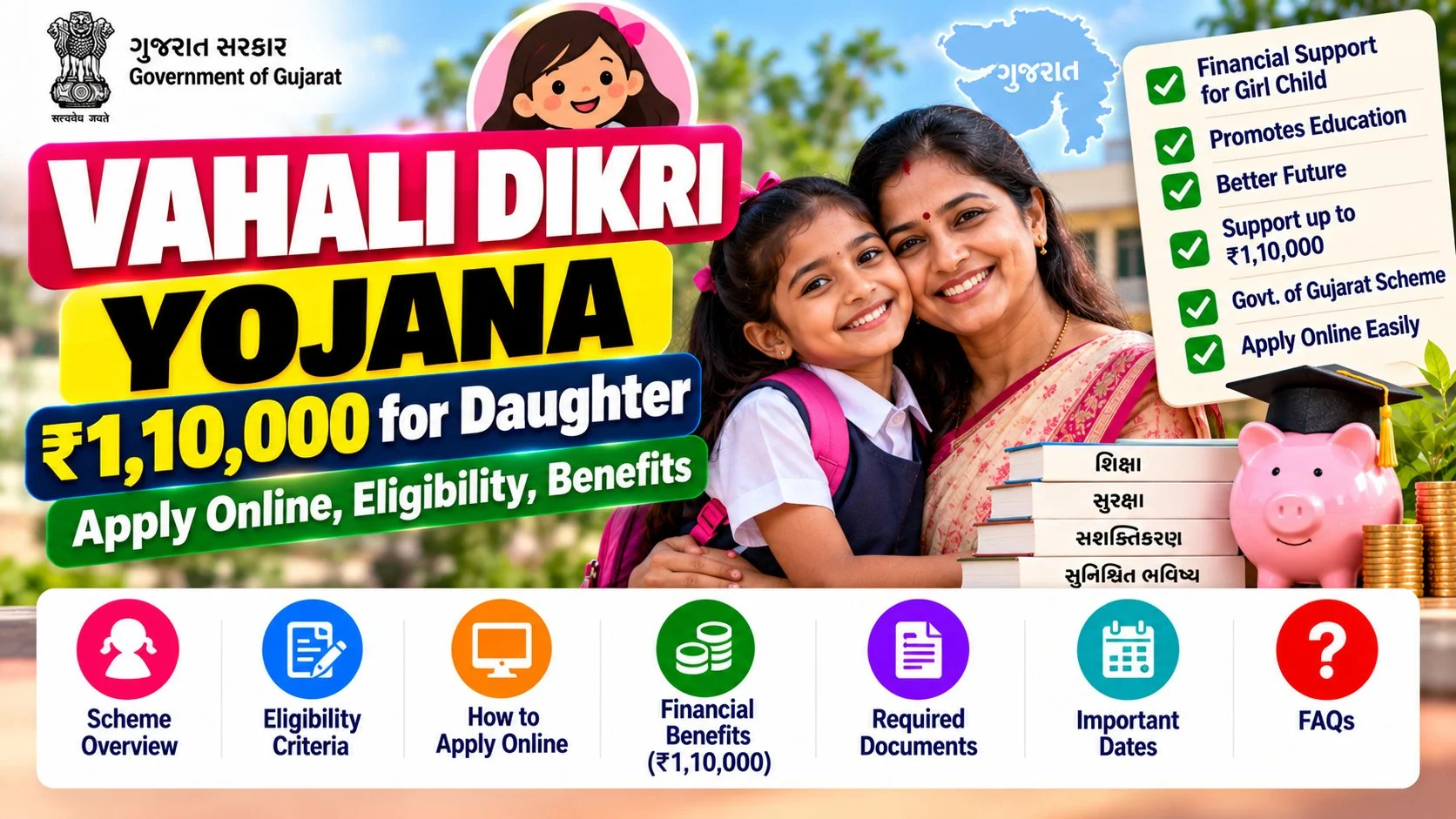

Raising a daughter in Gujarat comes with dreams — and bills. School admission fees in Class 1, tuition and books when she reaches Class 9, and then the big one: higher education or marriage expenses when she turns 18. If you have ever sat down and added up what your daughter’s future will actually cost, you know the number is intimidating. That is exactly the problem the Gujarat government tried to solve with the Vahali Dikri Yojana — a scheme that puts ₹1,10,000 directly into your daughter’s bank account in three stages, from her first day of school to her 18th birthday.
✅ This guide is based on official government sources and notifications. Last verified: October 12, 2026. Scheme details, eligibility criteria, and benefit amounts are revised by the government from time to time — always cross-check the latest information on the official portal before applying.
What is Vahali Dikri Yojana?
Vahali Dikri Yojana — which literally means “Dear Daughter Scheme” — is a Gujarat state government welfare scheme launched on 2 August 2019. It was designed with three clear goals: improve the state’s sex ratio, reduce school dropout rates among girls, and discourage child marriage by giving families a financial reason to celebrate a daughter’s birth and keep her in school.
Here is how it works in plain language: if your daughter was born on or after 2 August 2019 and your family meets the income criteria, the Gujarat government deposits a total of ₹1,10,000 into her bank account in three installments — when she enters Class 1, when she enters Class 9, and when she turns 18. The money is meant for her education and, at 18, for higher studies or marriage expenses.
The scheme has grown enormously since launch. According to official data shared by the Gujarat government, more than 2.78 lakh daughters have benefited so far, with total financial assistance exceeding ₹3,000 crore. In the state budget, ₹133 crore was sanctioned specifically for the scheme’s implementation. Year after year, enrolments have climbed — from 12,622 daughters in 2019-20 to 67,012 in 2023-24 — which tells you this is not a paper scheme. Real families are getting real money.
Vahali Dikri Yojana Benefit: ₹1,10,000 in 3 Installments
The ₹1,10,000 is not paid at once. It is tied to your daughter’s educational milestones, which is the clever part of the scheme’s design — the money rewards you for keeping her in school:
| Installment | When It Is Paid | Amount |
|---|---|---|
| 1st installment | When the daughter takes admission in Class 1 | ₹4,000 |
| 2nd installment | When the daughter takes admission in Class 9 | ₹6,000 |
| 3rd installment | When the daughter turns 18 years old | ₹1,00,000 |
| Total benefit | ₹1,10,000 | |
A few things worth understanding about each installment. The first two — ₹4,000 and ₹6,000 — are relatively small, but they arrive exactly when school expenses spike: admission fees, uniforms, books and bags in Class 1, and tuition pressure in Class 9, which is precisely the stage where many girls in economically weaker families drop out. The scheme’s designers knew this, which is why the second installment targets Class 9 specifically.
The third installment is the big one: ₹1,00,000 at age 18. By this point your daughter will be finishing school and thinking about college, vocational training, or marriage. One lakh rupees at that moment can genuinely change her options — it can cover a full year of college fees, fund a professional course, or take the financial pressure off a family’s wedding planning. The money is transferred directly to the daughter’s bank account through DBT (Direct Benefit Transfer), so there are no middlemen.
Vahali Dikri Yojana Eligibility: Who Can Apply?
Not every family qualifies, so check these conditions carefully before you start collecting documents:
- The girl child must be born on or after 2 August 2019. This is the scheme’s launch date, and it is a hard cutoff. Daughters born before this date are not eligible, no matter what.
- She must be among the first three children of the family. Per the Gujarat government’s latest official communication, daughters born as the first, second, or third child qualify. (Note: some older guides and portals still mention “first two daughters only” — that was the original rule. If an official at your local office cites the older rule, ask them to check the latest circular.)
- Family annual income must be ₹2,00,000 or less. You will need a valid income certificate to prove this.
- The family must be a permanent resident of Gujarat. A domicile or residence proof is required.
- The parents should not be income taxpayers. This condition appears in the official eligibility list — families where either parent files income tax are generally excluded, since the scheme targets economically weaker sections and BPL families.
- The family should not already be receiving a similar government pension or financial assistance for the girl child from another government body.
- School enrollment is mandatory. Since two of the three installments are tied to Class 1 and Class 9 admission, your daughter must be enrolled in school. This is non-negotiable.
If you are unsure whether you qualify, the simplest test is this: Gujarat resident + daughter born after August 2019 + family income under ₹2 lakh + she goes to school = you almost certainly qualify. Visit your nearest Anganwadi centre with your documents and they will confirm in minutes.
Documents Required for Vahali Dikri Yojana
Gather these before you start the application — incomplete documentation is the single biggest reason applications get delayed or rejected:
| Document | Details |
|---|---|
| Birth certificate of the girl child | Mandatory — proves date of birth (must be on/after 2 Aug 2019) |
| Aadhaar cards of parents/guardian | Both parents if available; at least one is required |
| Income certificate | Issued by competent authority; must show annual income ≤ ₹2,00,000 |
| Residence proof (domicile) | Ration card, voter ID, electricity bill, or domicile certificate |
| Marriage certificate of parents | Required as per the official document list |
| Ration card | Family ration card showing the girl child’s name |
| School admission proof | Admission receipt or bonafide certificate; final exam marksheet for Class 9 installment |
| Bank passbook | Parent/guardian’s bank passbook (for DBT); daughter’s own account needed before the ₹1,00,000 installment |
| BPL certificate (if applicable) | Strengthens the application for below-poverty-line families |
| Passport-size photographs | Recent photographs of the girl child and parents |
| Adoption certificate (if applicable) | Only for guardians who have legally adopted the girl child |
Pro tip: Get your income certificate made first, because it takes the longest (often 7-15 days through the Talati or online via Digital Gujarat). Everything else you probably already have at home. Scan every document clearly before uploading — blurry scans are a common reason for online rejection.
How to Apply Online for Vahali Dikri Yojana (Digital Gujarat Portal)
The online route goes through the Digital Gujarat portal. Here is the exact process:
- Visit the Digital Gujarat portal and log in with your registered mobile number and password. If you do not have an account, register first — it takes about five minutes and needs your mobile number and email.
- Search for “Vahali Dikri Yojana” in the services search bar once you are logged in.
- Open the scheme application form and fill in all required details: the girl child’s name and birth date, parents’ details, family income, address, and bank account information. Double-check the birth date — it must be on or after 2 August 2019.
- Upload the documents listed above. Make sure each scan is clear and under the portal’s file-size limit (PDF or JPG, usually up to 2 MB per file).
- Submit the form and note down the application reference number shown on the confirmation screen. Save a screenshot or print the acknowledgment — you will need this number to track your status.
The application itself is completely free — there is no fee at any stage. If anyone asks you for money to “get the form approved,” that is a scam. Report it to the District Women and Child Development office.
How to Apply Offline for Vahali Dikri Yojana
If the online portal is not working in your area, or you are more comfortable with paper forms, the offline route is equally valid:
- Anganwadi centres: The easiest option for most families. The Anganwadi worker will give you the form, help you fill it, and forward it to the ICDS office.
- Gram Panchayat office: In villages, the Talati or Village Computer Entrepreneur (VCE) can submit the application online on your behalf through the Gram Panchayat VCE portal.
- Taluka ICDS office: The Integrated Child Development Services office at your taluka accepts physical forms.
- District Women and Child Development office: The district-level office is the final authority — you can apply here directly if other channels are slow.
Carry originals plus two photocopy sets of every document. The officer will verify originals and keep the photocopies with your form.
How to Check Vahali Dikri Yojana Application Status
After submitting, you can track your application:
- Log in to the Digital Gujarat portal.
- Go to the “Application Status” or “Track Application” section.
- Enter your application reference number (the one you saved at submission).
- Your status will show as pending, approved, or rejected, sometimes with remarks from the verifying officer.
Status trackers can vary slightly by district and scheme year. If the portal does not show your status, visit the office where you submitted the form — the staff can check it in their system in a couple of minutes. Do not panic if it shows “pending” for several weeks; verification involves cross-checking income and residence records, which takes time.
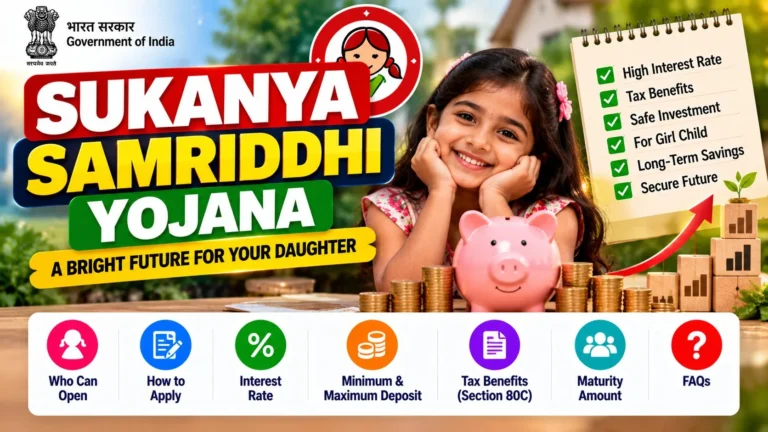
Vahali Dikri Yojana vs Sukanya Samriddhi Yojana: Which Is Better?
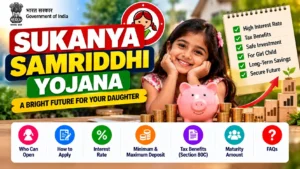
This is the question almost every Gujarat parent asks, so let us settle it honestly: they are not competitors — they are complements. Vahali Dikri Yojana is a Gujarat state grant (free money, no deposit needed) for families earning under ₹2 lakh. Sukanya Samriddhi Yojana (SSY) is a central government savings scheme where you deposit money (up to ₹1.5 lakh/year) and it grows at 8.2% interest.
| Feature | Vahali Dikri Yojana | Sukanya Samriddhi Yojana |
|---|---|---|
| Run by | Gujarat state government | Central government (India Post/banks) |
| Total benefit | ₹1,10,000 (grant, no deposit) | Up to ~₹69 lakh (on ₹1.5L/year deposits at 8.2%) |
| You deposit money? | No — it is free assistance | Yes — ₹250 to ₹1,50,000 per year |
| Income limit | Family income ≤ ₹2,00,000/year | No income limit |
| Eligibility | Gujarat residents only; girl born on/after 2 Aug 2019 | Any Indian girl below age 10 |
| Best for | Economically weaker Gujarat families | Any family that can save regularly |
The smart move: if you qualify for Vahali Dikri Yojana, take it — it is free money. And if you can save even ₹250 a month, open an SSY account too. The two schemes stack perfectly: the state grant covers milestones while your SSY deposits compound into a large corpus by age 21. Want to see exactly how much SSY can grow? Try our Sukanya Samriddhi Yojana calculator — it shows maturity value, PPF comparison, and tax savings in seconds. For the complete scheme guide, read our Sukanya Samriddhi Yojana 2026 article.
Common Reasons for Rejection (and How to Avoid Them)
Most rejections happen for fixable reasons. Here are the top ones:
- Incomplete or blurry documents: Re-scan anything unclear. This alone causes the majority of online rejections — and you can simply reapply with corrected files.
- Income certificate issues: An expired certificate, or one showing income above ₹2 lakh, kills the application instantly. Get a fresh certificate before applying.
- Birth date before 2 August 2019: This is non-negotiable. No exception exists for earlier births.
- Name mismatches: The girl child’s name must match across the birth certificate, Aadhaar (if any), school records, and bank account. Even a spelling difference can trigger verification failure.
- Not enrolled in school: If applying for the Class 1 or Class 9 installment, admission proof is mandatory.
- Parents are income taxpayers: If either parent files ITR, the family is generally excluded.
If your application is rejected, read the rejection remarks carefully, fix the specific issue, and reapply. There is no penalty for reapplying.
Important Things to Remember
- The ₹1,00,000 installment at age 18 requires the daughter to have her own bank account — open one well before her 18th birthday to avoid last-minute delays.
- Keep your application reference number safe until all three installments are received — that is a span of roughly 12-17 years.
- Update the WCD office if you change address, phone number, or bank account — DBT failures due to closed accounts are a real (and avoidable) problem.
- The scheme’s budget allocation and installment timelines can shift slightly year to year — the ₹133 crore sanction mentioned in recent reports covers ongoing implementation.
- Gujarat’s sex ratio context matters here: the 2011 Census recorded 918 females per 1,000 males in the state, which is why schemes like this exist. Every enrollment genuinely helps.
Frequently Asked Questions
What is the total benefit under Vahali Dikri Yojana?
Eligible daughters receive a total of ₹1,10,000 in three installments: ₹4,000 on admission to Class 1, ₹6,000 on admission to Class 9, and ₹1,00,000 when the daughter turns 18. The money is transferred directly to the bank account via DBT.
Who is eligible for Vahali Dikri Yojana in 2026?
Girls born on or after 2 August 2019, among the first three children of the family, whose family is a permanent resident of Gujarat with an annual income of ₹2,00,000 or less. The parents should not be income taxpayers, and the daughter must be enrolled in school.
How can I apply for Vahali Dikri Yojana online?
Apply through the Digital Gujarat portal: log in, search for “Vahali Dikri Yojana,” fill the form, upload documents, and save your application reference number. You can also apply offline at Anganwadi centres, Gram Panchayat offices, Taluka ICDS offices, or the District Women and Child Development office.
What documents are needed for the application?
Daughter’s birth certificate, parents’ Aadhaar cards, income certificate (≤ ₹2 lakh), residence proof, parents’ marriage certificate, ration card, school admission proof, bank passbook, recent photographs, and BPL certificate if applicable.
Can I apply if I have three daughters?
Per the Gujarat government’s latest official communication, daughters among the first three children of the family are covered. Some older guides mention only the first two daughters — if your local office cites the older rule, ask them to verify against the latest circular.
Is there any fee to apply for Vahali Dikri Yojana?
No. The application process is completely free, both online and offline. If anyone demands money to process your form, treat it as fraud and report it to the District Women and Child Development office.
Conclusion
Vahali Dikri Yojana is one of those rare schemes where the math is simple and the benefit is real: ₹1,10,000 for your daughter, at zero cost to you, timed to the moments when you need it most. With over 2.78 lakh daughters already enrolled and the Gujarat government continuing to fund it generously, this is not something to postpone.
If your daughter was born after August 2019 and your family income is under ₹2 lakh, gather your documents this week and apply — online through Digital Gujarat or offline at your nearest Anganwadi centre. And if you can save even a small amount regularly, pair it with a Sukanya Samriddhi account so your daughter gets both the state grant and the power of compounding. Her Class 1 admission, her Class 9 milestone, and her 18th birthday will thank you.