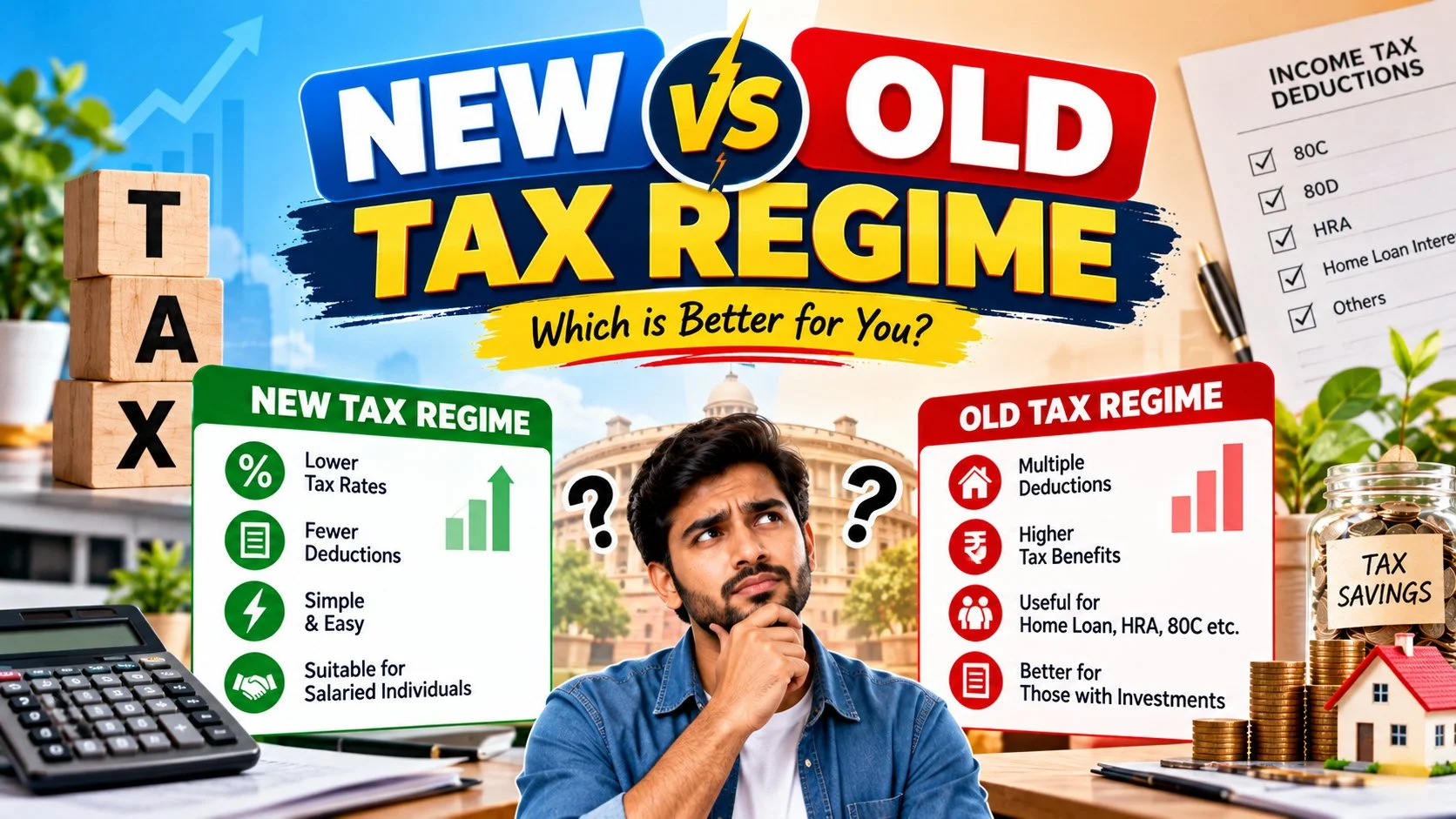

Every February, my inbox fills up with the same question from readers: “New vs old tax regime — which one should I pick?” And honestly, it is the right question to ask. Pick the wrong regime and you can end up paying tens of thousands of rupees extra in tax for no reason at all. The answer is not the same for everyone, so in this guide I will walk you through both regimes side by side, with the latest slabs for FY 2026-27, and real worked examples at four salary levels so you can see exactly which one saves more for you.
✅ This guide is based on official government sources and notifications. Last verified: October 17, 2026. Scheme details, eligibility criteria, and benefit amounts are revised by the government from time to time — always cross-check the latest information on the official portal before applying.
Before we get into the numbers, here is the one-line summary: the new tax regime is the default regime since FY 2023-24. It has lower slab rates and a big rebate that makes income up to ₹12 lakh (taxable) effectively tax-free, but you cannot claim most deductions. The old tax regime keeps the higher slab rates but lets you claim deductions like 80C, 80D, HRA and home loan interest. Your job is to figure out whether your deductions are big enough to beat the new regime’s lower rates.
New vs Old Tax Regime Slabs for FY 2026-27
Budget 2026 did not change the slab structure, so the rates below apply for FY 2026-27 (the financial year from 1 April 2026 to 31 March 2027, which you will file as AY 2027-28). Here is the full side-by-side comparison.
| Income Slab | New Regime Rate (default) | Old Regime Rate (below 60 years) |
|---|---|---|
| Up to ₹4,00,000 | Nil | — |
| ₹2,50,001 – ₹5,00,000 | 5% (from ₹4,00,001) | 5% |
| ₹5,00,001 – ₹8,00,000 | 5% | 20% |
| ₹8,00,001 – ₹10,00,000 | 10% | 20% |
| ₹10,00,001 – ₹12,00,000 | 10% | 30% |
| ₹12,00,001 – ₹16,00,000 | 15% | 30% |
| ₹16,00,001 – ₹20,00,000 | 20% | 30% |
| ₹20,00,001 – ₹24,00,000 | 25% | 30% |
| Above ₹24,00,000 | 30% | 30% |
Two things jump out from this table. First, the new regime charges a lower rate than the old regime at almost every income band — the old regime’s 20% and 30% slabs kick in far earlier. Second, these are marginal rates: a rate applies only to the slice of income inside that band, not to your whole income. This is the single most misunderstood part of the tax debate, so keep it in mind when we do the worked examples below.
Also note: the old regime gives senior citizens (60–80 years) a higher basic exemption of ₹3 lakh and super senior citizens (80+) ₹5 lakh. The new regime has no age-based difference — the same slabs apply to everyone.
New vs Old Tax Regime: The Real Differences That Matter
Slabs are only half the story. The bigger difference is what you are allowed to subtract from your income before the slabs apply. Here is how the two regimes differ on the things that actually move the needle.
| Feature | New Regime | Old Regime |
|---|---|---|
| Standard deduction (salaried) | ₹75,000 | ₹50,000 |
| Rebate u/s 87A | Up to ₹60,000 — zero tax if taxable income ≤ ₹12 lakh | Up to ₹12,500 — zero tax if taxable income ≤ ₹5 lakh |
| Effective zero-tax salary (salaried) | Up to ₹12,75,000 (₹12L + ₹75K standard deduction) | Up to ₹5,50,000 (₹5L + ₹50K standard deduction) |
| 80C deductions (PPF, EPF, ELSS, etc.) | Not allowed | Up to ₹1,50,000 |
| 80D (health insurance premium) | Not allowed | ₹25,000 (self/family), ₹50,000 (senior citizen parents) |
| HRA exemption | Not allowed | Allowed (as per rules) |
| Home loan interest u/s 24(b) | Not allowed | Up to ₹2,00,000 (self-occupied) |
| Employer NPS contribution (80CCD(2)) | Allowed (up to 14% of salary) | Allowed (up to 14% of salary) |
| Health & education cess | 4% on tax | 4% on tax |
| Surcharge (very high incomes) | Capped at 25% | Up to 37% |
The 87A rebate is the new regime’s biggest weapon. If your taxable income (after the ₹75,000 standard deduction) is ₹12 lakh or less, your tax is reduced to zero — that is a rebate of up to ₹60,000. For a salaried person, this means a gross salary of up to ₹12,75,000 pays zero income tax. There is also marginal relief if your income is just above ₹12 lakh, so you do not suddenly face a huge tax bill by earning a few thousand rupees more.
One housekeeping note: from 1 April 2026, the Income-tax Act, 2025 replaced the 1961 Act, and several section numbers changed (87A, for instance, is now renumbered). The deduction amounts and principles are unchanged, so your calculation works the same way.
Which Regime Is the Default?
The new tax regime is the default regime for individuals from FY 2023-24 onwards. That means if you file your ITR without making any choice, you are assessed under the new regime. To opt for the old regime, you must actively select it while filing your return.
If you are salaried with no business income, you can switch between the regimes every year — you simply choose while filing that year’s return. If you have business or professional income, the rules are stricter: switching back and forth is limited, and you may need to file Form 10-IEA. So business owners should think of the choice as more of a commitment.
New vs Old Tax Regime Deductions: What You Give Up in the New Regime
This is where most people make their decision. The old regime lets you claim a long list of deductions and exemptions that the new regime simply does not allow. Here are the ones that matter most:
- Section 80C (up to ₹1.5 lakh): EPF, PPF, ELSS mutual funds, life insurance premiums, children’s tuition fees, principal repayment on home loan, Sukanya Samriddhi Yojana deposits, NSC and tax-saving FDs. If you are already investing in these, the old regime rewards you.
- Section 80D (health insurance): ₹25,000 for self, spouse and children; ₹50,000 if the premium is for senior citizen parents. Medical expenses for very senior citizens also qualify in some cases.
- HRA exemption: If you live in rented accommodation and receive House Rent Allowance as part of your salary, the exempt portion can be substantial — often ₹2–4 lakh a year in metro cities.
- Section 24(b) (home loan interest): Up to ₹2 lakh per year on a self-occupied house. This is often the single biggest deduction for homeowners.
- Section 80CCD(1B) (NPS): An extra ₹50,000 for your own NPS contribution, over and above 80C. Our detailed NPS guide explains how this works.
- Section 80TTA/80TTB: Interest on savings accounts (₹10,000) and, for senior citizens, interest income up to ₹50,000 — relevant if you invest in schemes like the Senior Citizen Savings Scheme.
The new regime allows only a handful of these — the ₹75,000 standard deduction, the employer NPS contribution under 80CCD(2), and a few specific allowances. So the practical question is always: do my total deductions beat the new regime’s lower slab rates? The worked examples below answer exactly that.
New vs Old Tax Regime: Which Is Better? 4 Worked Examples
Theory is fine, but numbers decide. I have worked out four illustrative examples at different salary levels. Assumptions, stated clearly so you can adjust them for your own case:
- Salaried individual, below 60 years of age, no other income.
- New regime: ₹75,000 standard deduction; 87A rebate applies where taxable income ≤ ₹12 lakh.
- Old regime: ₹50,000 standard deduction + 80C ₹1,50,000 + 80D ₹25,000 in every example; HRA and home-loan interest as noted per example. These assumptions are illustrative — your HRA and deductions will differ.
- 4% health and education cess added on the final tax in both regimes.
Example 1: ₹8 lakh salary
| Particulars | New Regime | Old Regime |
|---|---|---|
| Gross salary | ₹8,00,000 | ₹8,00,000 |
| Less: standard deduction | ₹75,000 | ₹50,000 |
| Less: 80C + 80D | Not allowed | ₹1,75,000 |
| Taxable income | ₹7,25,000 | ₹5,75,000 |
| Slab tax | ₹16,250 (5% on ₹3,25,000) | ₹27,500 |
| 87A rebate | ₹16,250 (full rebate) | Nil (income above ₹5L) |
| Total tax + 4% cess | ₹0 | ₹28,600 |
Winner: New regime — you pay zero tax without needing to invest a single rupee in tax-saving instruments.
Example 2: ₹12 lakh salary
Assumed old-regime deductions: 80C ₹1,50,000 + 80D ₹25,000 + HRA exemption ₹2,00,000 (illustrative).
| Particulars | New Regime | Old Regime |
|---|---|---|
| Gross salary | ₹12,00,000 | ₹12,00,000 |
| Less: standard deduction | ₹75,000 | ₹50,000 |
| Less: other deductions | Not allowed | ₹3,75,000 |
| Taxable income | ₹11,25,000 | ₹7,75,000 |
| Slab tax | ₹52,500 | ₹67,500 |
| 87A rebate | ₹52,500 (full rebate) | Nil |
| Total tax + 4% cess | ₹0 | ₹70,200 |
Winner: New regime — the 87A rebate wipes out the entire tax bill. The old regime cannot compete here even with ₹3.75 lakh of deductions.
Example 3: ₹20 lakh salary
Assumed old-regime deductions: 80C ₹1,50,000 + 80D ₹25,000 + HRA ₹2,40,000 + home loan interest ₹2,00,000 (illustrative).
| Particulars | New Regime | Old Regime |
|---|---|---|
| Gross salary | ₹20,00,000 | ₹20,00,000 |
| Less: standard deduction | ₹75,000 | ₹50,000 |
| Less: other deductions | Not allowed | ₹6,15,000 |
| Taxable income | ₹19,25,000 | ₹13,35,000 |
| Slab tax | ₹1,85,000 | ₹2,13,000 |
| Total tax + 4% cess | ₹1,92,400 | ₹2,21,520 |
Winner: New regime — by about ₹29,000, even though the old regime claimed over ₹6.6 lakh in total deductions. This is the point most people miss: the new regime’s lower slab rates are doing heavy lifting.
Example 4: ₹30 lakh salary
Assumed old-regime deductions: 80C ₹1,50,000 + 80D ₹25,000 + HRA ₹2,40,000 + home loan interest ₹2,00,000 (illustrative).
| Particulars | New Regime | Old Regime |
|---|---|---|
| Gross salary | ₹30,00,000 | ₹30,00,000 |
| Less: standard deduction | ₹75,000 | ₹50,000 |
| Less: other deductions | Not allowed | ₹6,15,000 |
| Taxable income | ₹29,25,000 | ₹23,35,000 |
| Slab tax | ₹4,82,500 | ₹5,13,000 |
| Total tax + 4% cess | ₹5,01,800 | ₹5,33,520 |
Winner: New regime — by roughly ₹32,000. Notice the pattern: the old regime’s deductions are worth the same in rupees, but they save tax at the old regime’s higher marginal rates, and that is still not enough.
When does the old regime actually win?
Fair question — the old regime is not dead. It wins when your deductions are genuinely large. Take the same ₹30 lakh salary, but with HRA of ₹3,60,000, home loan interest of ₹2,00,000, 80C of ₹1,50,000, 80D of ₹25,000 and NPS 80CCD(1B) of ₹50,000 (total deductions ₹8,35,000 including standard deduction). Taxable income drops to ₹21,65,000, and old-regime tax comes to about ₹4,80,480 including cess — roughly ₹21,000 less than the new regime.
The rule of thumb I use: if your total deductions (beyond the standard deduction) cross roughly ₹4.5–5 lakh — typically a big HRA plus a home loan plus full 80C — run both calculations properly, because the old regime may win. Below that, the new regime usually wins. Here is the summary:
| Gross Salary | Old Regime Tax (illustrative) | New Regime Tax (illustrative) | Winner |
|---|---|---|---|
| ₹8,00,000 | ₹28,600 | ₹0 | New regime |
| ₹12,00,000 | ₹70,200 | ₹0 | New regime |
| ₹20,00,000 | ₹2,21,520 | ₹1,92,400 | New regime |
| ₹30,00,000 | ₹5,33,520 | ₹5,01,800 | New regime |
| ₹30,00,000 (very high deductions) | ₹4,80,480 | ₹5,01,800 | Old regime |
These are illustrative examples with stated assumptions — plug in your own HRA, 80C and home loan numbers and the answer can shift. That is exactly what the official calculator is for.
New vs Old Tax Regime Calculator: Compare in 2 Minutes
You do not need to do this maths by hand. The Income Tax Department’s e-filing portal has a free Income and Tax Estimator that calculates your liability under both regimes side by side. Here is how I use it:
- Go to the official e-filing portal at incometax.gov.in.
- Open the Income and Tax Estimator page (no login needed).
- Enter your gross salary, HRA, and each deduction you claim (80C, 80D, home loan interest).
- The tool shows your tax under both regimes — pick the lower one.
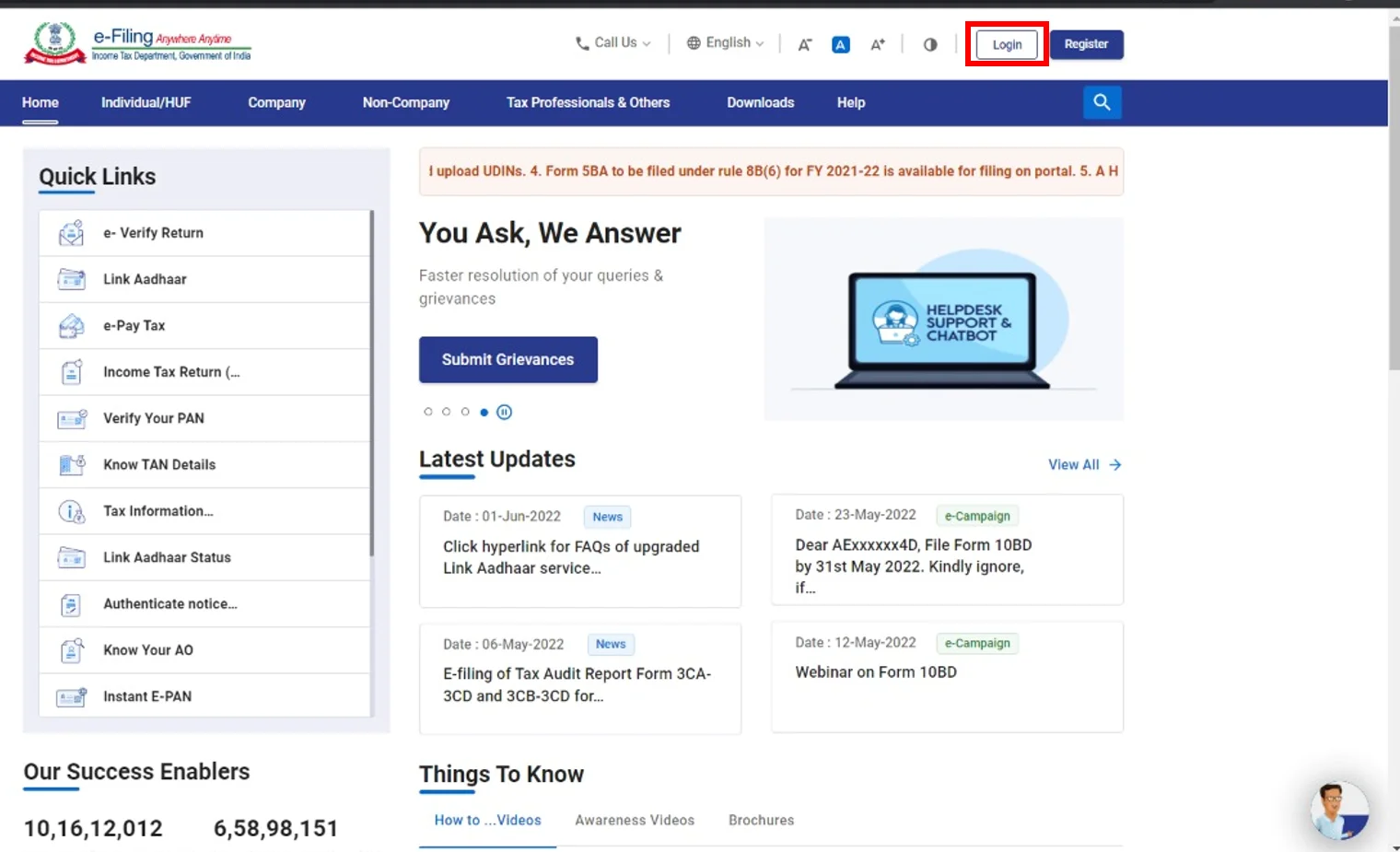
The official incometax.gov.in portal — the Income and Tax Estimator here compares both regimes for your exact numbers. (Screenshot: incometax.gov.in)
Third-party calculators on sites like ClearTax do the same job, but I prefer the official tool because it always reflects the latest notified slabs. Whatever tool you use, re-run the comparison every year — a salary hike, a new home loan, or a change in HRA can flip the answer.
New vs Old Tax Regime for Salaried Employees: My Decision Framework
If you are salaried, the decision usually comes down to three questions:
1. Are your total deductions above ₹4.5–5 lakh? Add up your 80C (₹1.5L max), 80D, HRA exemption and home loan interest. If the total is below this range, the new regime almost certainly wins, as the examples above show.
2. Do you actually invest for the deductions, or for the deduction? This is the trap I see most often. People put money into ELSS or insurance policies they do not need, just to claim 80C — and still end up paying more tax than the new regime would have cost. A deduction is only worth it if the underlying investment or expense makes sense for you anyway. If you are investing in PPF or ELSS for genuine long-term goals, the old regime rewards that habit. If you are forcing investments purely for tax, stop and compare properly.
3. Do you have a home loan or large HRA? These two are the biggest swing factors. A ₹2 lakh home loan interest deduction plus a metro-city HRA of ₹3–4 lakh is the classic combination that makes the old regime win. Renters in smaller cities with modest HRA rarely clear the bar.
One more salaried-specific point: your employer deducts TDS based on the regime you declare at the start of the financial year (the default declaration is the new regime). But the final choice happens when you file your ITR — you can still switch to the old regime then and claim a refund if excess TDS was deducted. So the TDS declaration is not binding.
How to Choose Your Regime While Filing ITR
When you file your return on the e-filing portal, the ITR form asks you to choose between the old and new regime. Since the new regime is the default, you only need to act if you want the old one — select it explicitly in the return.
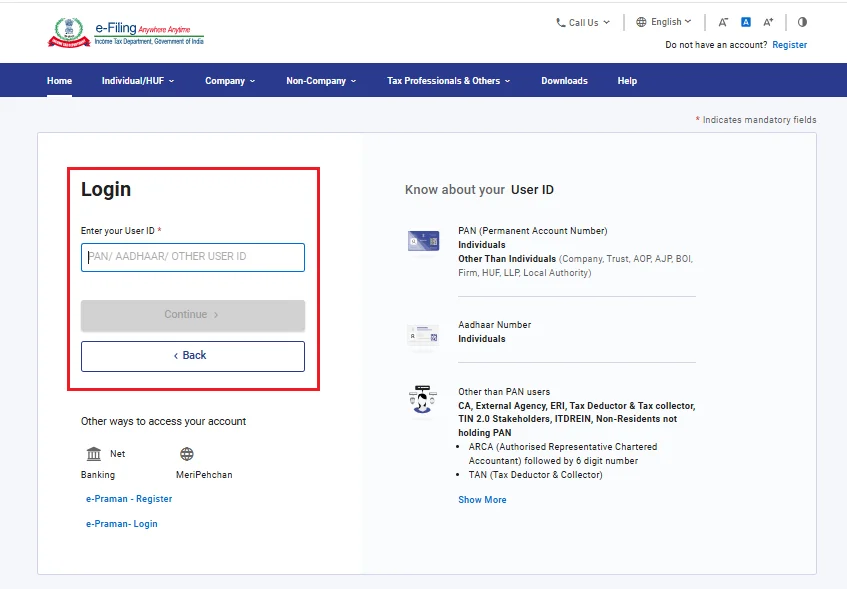
Log in to the e-filing portal with your PAN to file your return and select your preferred tax regime. (Screenshot: incometax.gov.in)
If you have business or professional income and want to opt out of the new regime, you must file Form 10-IEA before the due date — and remember, business taxpayers face restrictions on switching back. Salaried taxpayers have it simpler: just pick the better regime each year when filing.
Common Mistakes People Make in the New vs Old Tax Regime Choice
- Comparing gross salary instead of taxable income. Always subtract the standard deduction first (₹75K new, ₹50K old) — the 87A rebate works on taxable income, not gross.
- Forgetting the 87A rebate cliff. At taxable income of exactly ₹12 lakh, new-regime tax is zero; a little above it, marginal relief softens the jump, but the benefit phases out. Know where you stand.
- Counting deductions you will not actually claim. Only count 80C investments you genuinely make, HRA you genuinely receive, and interest you genuinely pay.
- Assuming last year’s answer still holds. A promotion, a new home loan, or moving to a cheaper rented house can flip the better regime. Re-check every financial year.
- Ignoring the 4% cess. It applies on top of the slab tax in both regimes — small, but it is part of the final number.
Getting your taxes right is also part of overall financial health — just like keeping an eye on your CIBIL score before taking any loan. Small financial habits compound.
Frequently Asked Questions
Which is better, new vs old tax regime for salaried employees?
For most salaried employees, the new regime is better. Its lower slab rates plus the 87A rebate (zero tax up to ₹12 lakh taxable income, i.e. ₹12.75 lakh salary) beat the old regime unless your total deductions — 80C, 80D, HRA, home loan interest — exceed roughly ₹4.5–5 lakh. Always compare both with your actual numbers before filing.
What is the 87A rebate limit in the new regime for FY 2026-27?
Under the new regime, Section 87A gives a rebate of up to ₹60,000 if your total taxable income does not exceed ₹12,00,000 — making your tax liability zero. For salaried individuals, the ₹75,000 standard deduction means a gross salary of up to ₹12,75,000 is effectively tax-free. Marginal relief applies if your income is marginally above ₹12 lakh.
Is the new tax regime the default regime?
Yes. The new tax regime (Section 115BAC) has been the default regime since FY 2023-24. If you file your ITR without choosing, you are assessed under the new regime. You must actively opt for the old regime while filing if it works out better for you.
Can I switch between new and old tax regime every year?
If you are salaried with no business income, yes — you can choose either regime each year while filing your ITR. If you have business or professional income, switching is restricted: opting out of the new regime requires Form 10-IEA, and you cannot flip-flop freely.
What deductions are not allowed in the new tax regime?
The new regime does not allow most Chapter VI-A deductions: 80C (₹1.5 lakh), 80D (health insurance), HRA exemption, home loan interest u/s 24(b), and 80CCD(1B) NPS deduction. It does allow the ₹75,000 standard deduction for salaried taxpayers and the employer’s NPS contribution under 80CCD(2).
Do I need to invest in tax-saving instruments if I choose the new regime?
No — and that is one of its biggest advantages. Under the new regime you pay lower slab rates without any compulsion to invest. Invest in PPF, ELSS or NPS because the investment suits your goals, not because the tax regime forces you to. If you do invest heavily anyway (say ₹5 lakh+ in deductions), re-check whether the old regime beats the new one.