
If you are a central government employee, there is one question that has probably crossed your mind every single week this year: 8th pay commission kab lagu hoga? I have been tracking every official notice, every commission visit, and every union demand on this topic daily, and the honest truth is that most of what you see on WhatsApp and YouTube about it right now is either a demand, a projection, or just plain fake. In this guide, I am going to separate what is actually happening from what is only being talked about — the October 2026 meetings, the real fitment factor demands, honest salary estimates, what pensioners are asking for, and where the DA merger story stands.
✅ This guide is based on official government sources and notifications. Last verified: October 12, 2026. Scheme details, eligibility criteria, and benefit amounts are revised by the government from time to time — always cross-check the latest information on the official portal before applying.
8th Pay Commission Latest News: October 2026 Update
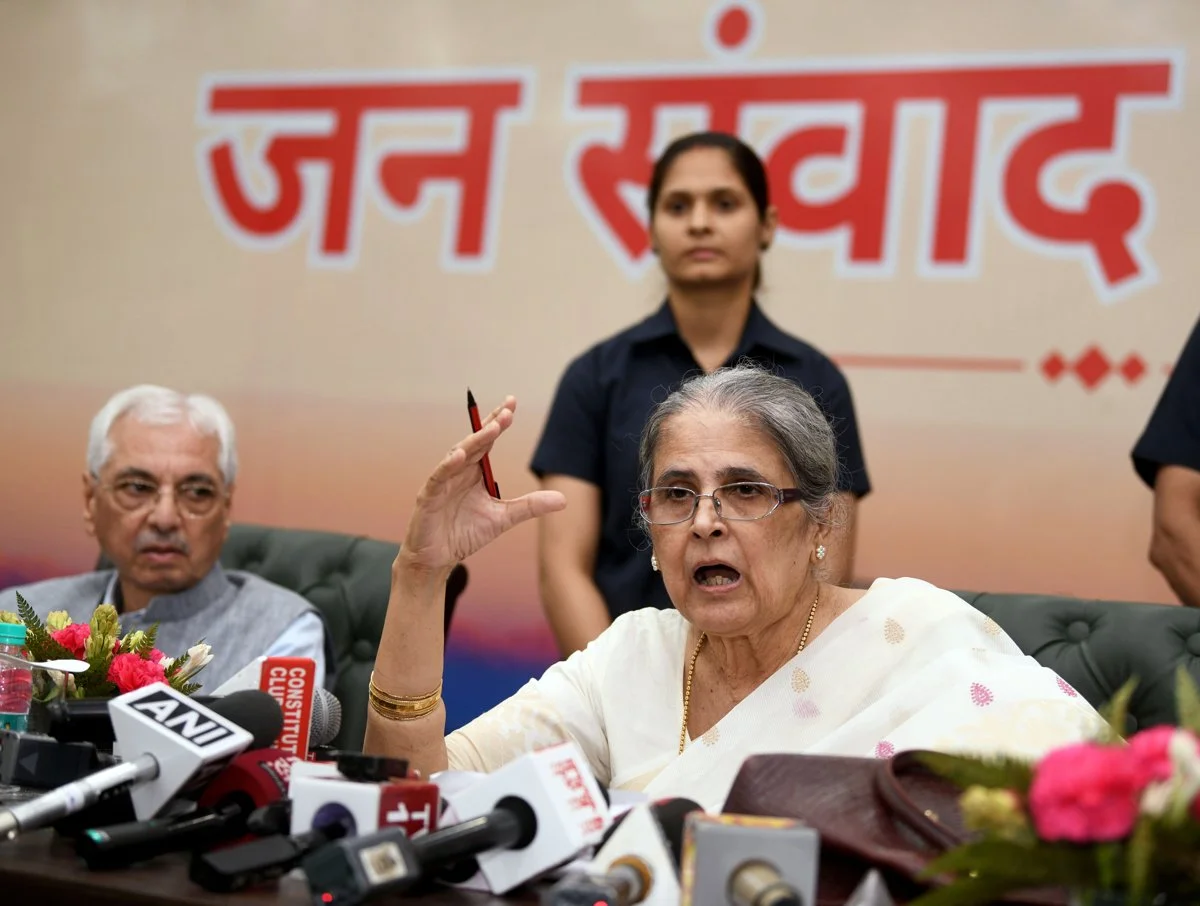
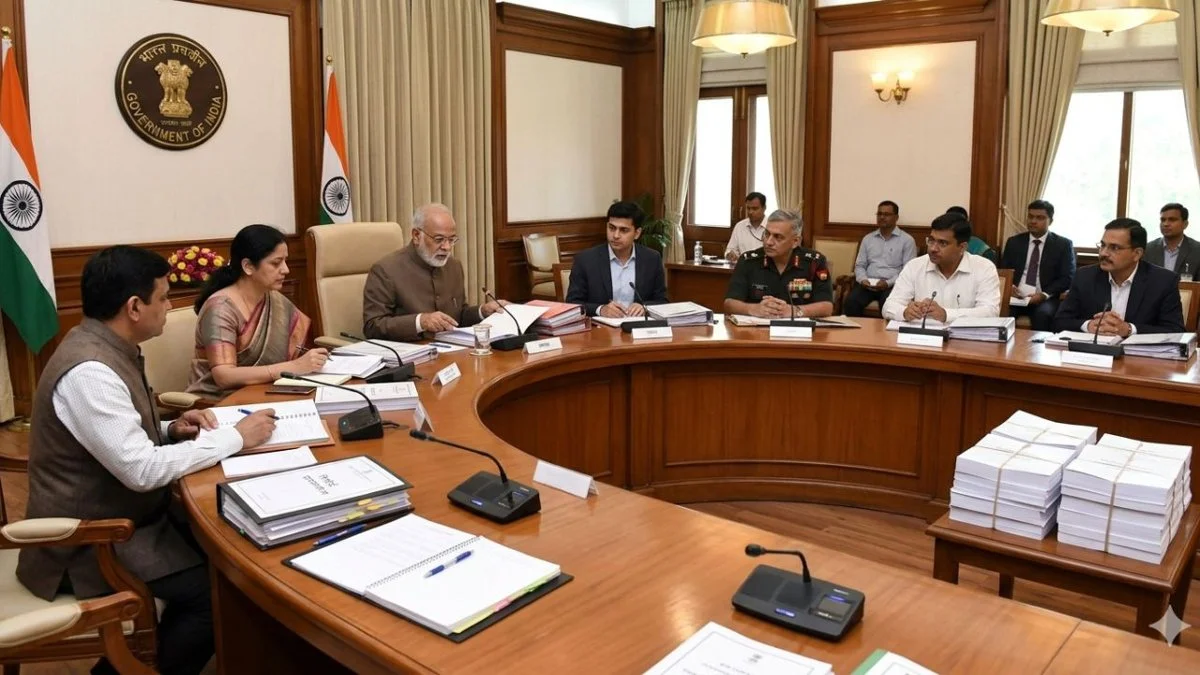
Let me start with what has actually happened, because this is where most reports get sloppy. The 8th Central Pay Commission, chaired by retired Justice Ranjana Prakash Desai, was constituted by the Union Government on November 3, 2025. It has been given an 18-month term, which means its report is expected around May 2027. The Commission is in the middle of its consultation phase — it travels to different states, meets employee federations, pensioner associations, and other stakeholders, collects written demands, and will only then draft its recommendations.
Here is the latest confirmed timeline. The Commission held its stakeholder consultations in Bengaluru on October 7 and 8, 2026. Those meetings are now over. The next round is scheduled in Mumbai on October 22 and 23, 2026, where the panel is expected to meet employee and pensioner organisations, including railway staff unions, to discuss pay, pensions, allowances, and service matters. Organisations that wanted to interact with the Commission in Mumbai had to submit their appointment requests by October 10, 2026.
Before Bengaluru, the Commission had already covered Delhi, Ladakh, Uttar Pradesh, Chennai (September 7-8), Puducherry (September 9), Chandigarh (September 16-18), and Jaipur (August 31 – September 1). So the consultation machine is clearly moving fast, and employee bodies are using every one of these meetings to push their demands on record.
The big story out of the Bengaluru meeting was the set of demands placed by the Karnataka Posts and Telecommunications Pensioners’ Association, which backed the National Council – Joint Consultative Machinery (Staff Side) position: a fitment factor of 3.833, minimum basic pay of Rs 69,000, minimum pension of Rs 34,470, and a 6% annual increment in place of the current 3%. Let me be very clear here, because I will repeat this through the article: these are demands submitted to the Commission. They are not approved. The Commission has not finalised any fitment factor, and the government has not taken any decision on it.
One more honest update from the same week: on October 14, 2026, the Union Cabinet met and did NOT announce the pending July 2026 DA hike. It cleared a 78-day productivity-linked bonus for railway employees and extended a social assistance programme, but the Dearness Allowance revision due from July 1, 2026 is still pending. Employee unions held lunch-hour demonstrations on October 16 demanding its immediate release. I cover the DA situation in detail below because it directly connects to the fitment factor debate.
8th Pay Commission Kab Lagu Hoga? The Honest Timeline
This is the most-searched question on this topic, and it deserves a straight answer: as of October 2026, no implementation date has been announced. Anyone telling you a fixed date — January 2026, April 2027, or anything else — is guessing. Here is what we actually know about the timeline.
The Commission was constituted on November 3, 2025 with an 18-month term. Working backwards, the report is due around May 2027. After the report is submitted, the government takes its own time to study it, accept it fully or with modifications, and then issue implementation orders. If you look at how the 7th Pay Commission played out, the panel submitted its report in November 2015 and the government implemented it from January 1, 2016 — but that was an unusually fast turnaround, and the arrears were paid out over time.
For the 8th Pay Commission, some news reports have projected that rollout could take until 2029-2030. Treat that as a projection, not a fact — the government has said nothing official about the effective date. What typically happens is this: the Commission recommends an effective date (usually January 1 of a given year), the government accepts or changes it, and any delay between the effective date and the actual payout is compensated through arrears. That is how employees eventually get the money even when implementation is delayed.
So what should you realistically expect? The consultation phase runs through 2026. The report lands around May 2027. Government decision and rollout will follow after that. Between now and then, your salary continues to be governed by the 7th Pay Commission pay matrix plus DA revisions. If you are planning big financial decisions around the 8th Pay Commission, my advice is simple: do not borrow or spend against money that has not been approved yet. When the orders do come, I will update this guide with the exact effective date and arrears calculation method.
8th Pay Commission Fitment Factor: The Number That Decides Everything
If there is one technical term you need to understand in this entire debate, it is the fitment factor. The fitment factor is simply the multiplier applied to your current basic pay to arrive at your revised basic pay under the new pay commission. That is it. Every salary estimate, every viral claim, every union demand ultimately comes down to this one number.
Let me give you the history so you can see the pattern. The 6th Pay Commission used a fitment factor of 1.86. The 7th Pay Commission recommended 2.57, which is how the minimum basic pay became Rs 18,000 (Rs 7,000 x 2.57, rounded). Now, for the 8th Pay Commission, employee federations are demanding much higher multipliers — and the headline demand is 3.833 from the NC-JCM Staff Side.
| Pay Commission | Fitment Factor | Minimum Basic Pay Result |
|---|---|---|
| 6th CPC | 1.86 | Rs 7,000 (approx) |
| 7th CPC | 2.57 | Rs 18,000 |
| 8th CPC — union demand | 3.833 (demanded, not approved) | Rs 69,000 (demanded, not approved) |
How did the unions arrive at 3.833? The Staff Side’s calculation is based on a need-based minimum wage formula, using updated norms for family requirements, and it factors in how much prices have risen since the 7th Pay Commission. The math is straightforward: Rs 18,000 x 3.833 = Rs 68,994, which rounds to the demanded Rs 69,000 minimum basic pay. Some media estimates have also floated lower illustrative factors in the 1.83 to 2.86 range, but those are projections by commentators, not demands and not decisions.
Here is the part most people miss, and it is important. The fitment factor is NOT the same as your salary hike percentage. Your current take-home already includes DA at 60% of basic pay. When a new pay commission arrives, the existing DA gets folded into the calculation — that is the DA merger question I will explain below — so the real increase in your pocket is much smaller than the fitment factor suggests. A 3.833 factor does not mean a 283% hike. It means your basic pay is recomputed at 3.833 times the old basic, with DA then reset. Keep this in mind before you forward any viral salary chart.
8th Pay Commission Salary Calculator: Estimate Your New Basic Pay
Now for the section everyone scrolls to. Below is an estimate table showing what basic pay would look like at each pay level IF the demanded fitment factor of 3.833 were applied. I want to be completely transparent about what this table is and is not: it is an illustrative calculation based on the NC-JCM Staff Side demand, using the 7th Pay Commission’s pay matrix entry pay for each level. It is not the government’s decision. The Commission has not approved any fitment factor, and the final pay matrix may look very different — including the union proposal to merge the current 18 levels into 7 levels.
To use it, find your current pay level and basic pay, then multiply by 3.833. That is the entire “calculator” logic the viral charts use. The table below just does the multiplication for you.
| Pay Level | 7th CPC Basic Pay (Entry) | Estimated 8th CPC Basic (x 3.833) |
|---|---|---|
| Level 1 | Rs 18,000 | Rs 68,994 |
| Level 4 | Rs 25,500 | Rs 97,742 |
| Level 6 | Rs 35,400 | Rs 1,35,688 |
| Level 7 | Rs 44,900 | Rs 1,72,102 |
| Level 8 | Rs 47,600 | Rs 1,82,451 |
| Level 10 | Rs 56,100 | Rs 2,15,031 |
| Level 11 | Rs 67,700 | Rs 2,59,494 |
| Level 13 | Rs 1,23,100 | Rs 4,71,842 |
| Level 14 | Rs 1,44,200 | Rs 5,52,719 |
Important: These figures are illustrative estimates based on the union-demanded fitment factor of 3.833. They are not approved salaries. The final fitment factor, pay matrix, DA treatment, and allowances will be decided only after the Commission submits its report and the government acts on it.
A few things this table does not show, because no estimate table can. First, HRA, transport allowance, and other allowances are revised separately and are not part of the basic pay multiplication. Second, your actual monthly increase depends on how DA is treated at transition — if DA is merged into basic, the DA percentage resets and your gross salary math changes completely. Third, income tax will take its share of any increase, so the in-hand jump is always smaller than the gross jump. If you want a realistic sense of the final outcome, most independent projections put the real hike in the 20% to 30% range on total emoluments — but even that is a projection, not a promise.
8th Pay Commission for Pensioners: What Is Being Demanded
Pensioners are very much part of this process — the Commission’s terms of reference cover central government pensioners too, and pensioner associations are presenting at every state consultation. If you are a retired central government employee or a family pensioner, here is what is on the table.
The headline pension demand, placed before the Commission in Bengaluru, is a minimum pension of Rs 34,470. The logic mirrors the pay demand: the current minimum pension under the 7th Pay Commission is Rs 9,000, and applying the demanded 3.833 fitment factor gives roughly Rs 34,497, rounded in the demand to Rs 34,470. Alongside this, the Staff Side has demanded that the annual increment rate be doubled from 3% to 6%, which would compound pension growth faster over a retiree’s lifetime.
Another significant pensioner demand has come from the Bharat Pensioners Samaj, which has asked the Commission to look at the commuted pension restoration period. Right now, a pensioner who commutes part of their pension gets the full pension restored after 15 years. The demand is to reduce this to 11 years. Like everything else in this article, this is a proposal under consideration — not a rule change.
Pensioners should also watch the Dearness Relief (DR) track closely. DR is the pensioner’s equivalent of DA, and it moves on the same cycle. The July 2026 DR revision is pending along with the DA revision, and whatever the Commission eventually recommends on DA merger will flow directly into pension calculations too. If you are planning retirement finances around these numbers, the National Pension System (NPS) guide on this site explains how market-linked retirement savings work alongside your government pension, and the Senior Citizen Savings Scheme remains one of the safest places to park retirement corpus at guaranteed rates.
DA Merger in 8th Pay Commission: What It Means and Why Unions Want It
DA merger is one of those phrases that gets thrown around a lot and explained rarely. Let me fix that. Dearness Allowance is currently 60% of basic pay for central government employees (after the January 2026 revision from 58%, announced on April 22, 2026). Every time a new pay commission arrives, the question is what happens to this accumulated DA. A “DA merger” means folding the existing DA into the basic pay before applying the new fitment factor, so the new basic starts from a higher base and the DA percentage resets to a low number.
Why are unions pushing for it now? Because DA is at 60% and climbing — it stood at 46% in July 2023, 50% in January 2024, 53% in July 2024, 55% in January 2025, 58% in July 2025, and 60% in January 2026, as per figures cited by the Confederation of Central Government Employees and Workers. The unions argue that with inflation compensation running this high, the fitment factor must account for it, either through a higher multiplier or through a formal DA merger. There is also a precedent: in 2004, when DA crossed 50%, the government merged 50% of DA into basic pay ahead of the 6th Pay Commission. That history is exactly why the demand carries weight this time.
Now the honest part. The July 2026 DA revision — the one that would likely take DA to 63% or 64% — has NOT been announced. The Cabinet skipped it on October 14, 2026, and no new date has been given. Media reports say a 3% hike to 63% is the most likely outcome based on inflation data, with some reports mentioning 64%, but until the government issues the official order, the rate is not confirmed. The Confederation’s October 14 letter to the Cabinet Secretary, followed by the October 16 demonstrations, shows how seriously employees are taking the delay. When the DA order finally comes, it will be effective from July 1, 2026 with arrears — that part of the process is standard.
How does all this connect to the 8th Pay Commission? The higher DA climbs before the new pay structure kicks in, the more important the DA merger question becomes. If the Commission recommends merging DA and the government accepts it, your new basic pay absorbs the inflation compensation and DA restarts from a small base. If not, the fitment factor has to do that work instead. This is the technical heart of the negotiation happening in rooms like the Bengaluru and Mumbai consultations, even if it does not make it into viral headlines.
How Much Will Your Salary Actually Increase? A Reality Check
Let me give you the reality check that most viral posts skip, because I would rather you hear it from me than learn it the hard way. The fitment factor applies to basic pay. Your current salary already includes 60% DA on top of that basic. So when the new commission “revises” your pay, a large part of the new basic is just your old DA wearing a new name. The genuine increase — the part that is actually new money — comes from the fitment factor exceeding what DA merger alone would give you.
Here is a simple way to think about it. Take a Level 6 employee at Rs 35,400 basic today. With 60% DA, the pay-plus-DA component is Rs 35,400 + Rs 21,240 = Rs 56,640 (before HRA and other allowances). If the demanded 3.833 factor were applied with full DA merger, the new basic would be about Rs 1,35,688, and DA would reset near zero — so the jump on this component would be very large. But if the final approved factor is lower, or DA treatment differs, the real increase shrinks fast. This is why independent projections cluster around a 20% to 30% real increase in total emoluments rather than the eye-popping multiples the raw factor suggests.
My practical take: use the estimate table above as a ceiling scenario based on union demands, not as a promise. Plan your finances on your current salary. If and when the Commission’s recommendations are accepted, treat the arrears as a windfall to save or invest — not as money you have already spent. Speaking of which, a salary hike is the best time to check your credit health before taking any loan against it; you can check your CIBIL score for free first. And if the hike frees up monthly surplus, parking it in Sukanya Samriddhi Yojana for a daughter or reviewing your EPF balance and withdrawal rules are far smarter moves than upgrading your lifestyle on day one.
8th Pay Commission Meetings So Far: Full Timeline
For everyone who wants the complete picture in one place, here is every confirmed milestone of the 8th Pay Commission process so far, in order. I will keep updating this table as new meetings are announced.
| Date | Event | Status |
|---|---|---|
| November 3, 2025 | 8th Pay Commission constituted; Justice Ranjana Prakash Desai appointed chairperson | Done |
| April 28-30, 2026 | Stakeholder consultations in Delhi | Done |
| August 31 – September 1, 2026 | Consultation visit to Jaipur | Done |
| September 7-9, 2026 | Consultations in Chennai (Sep 7-8) and Puducherry (Sep 9) | Done |
| September 16-18, 2026 | Consultation visit to Chandigarh | Done |
| October 7-8, 2026 | Stakeholder consultations in Bengaluru; Staff Side demands (3.833 fitment, Rs 69,000 minimum pay) placed on record | Done |
| October 14, 2026 | Union Cabinet meeting; July 2026 DA hike not announced | Done |
| October 22-23, 2026 | Stakeholder consultations in Mumbai (appointment requests closed October 10) | Upcoming |
| May 2027 (expected) | Commission’s 18-month term ends; report due | Pending |
Beware of Viral Salary Lists Doing the Rounds
A quick warning before you believe the next forwarded message. In mid-October 2026, a viral claim circulated on social media listing exact post-wise salaries under the 8th Pay Commission — peons at Rs 45,000, inspectors at Rs 1.2 lakh, scientists at Rs 1.4 lakh, covering 17 posts. The Economic Times investigated it and reported these as unverified projections: the actual pay structure will depend on the Commission’s recommendations and the government’s decisions, neither of which exists yet. There is simply no official pay matrix to quote from.
The rule I follow, and the one I suggest for you: if a salary figure does not come from the Commission’s own notices or a government order, treat it as speculation. The reliable places to check are the Press Information Bureau (pib.gov.in), the Department of Expenditure under the Finance Ministry (finmin.nic.in), and the Department of Personnel and Training (dopt.gov.in). If a “breaking news” claim is real, it will appear on at least one of these within hours.
What You Should Do Right Now
The Commission is still in its listening phase, which means there is nothing to apply for and no form to fill — but there are smart things you can do while you wait. First, keep your service records, pay slips, and pension documents organised; when implementation orders arrive, discrepancies in service records are the most common reason for delayed arrears. Second, if you belong to a recognised union or association, make sure your demands reach the Commission through the official consultation channel rather than social media noise.
Third, use this waiting period for financial housekeeping. Do not take on new EMIs counting on the hike. Build or top up your emergency fund. And when the arrears do arrive — as they did after previous commissions — have a plan for the lump sum before it hits your account, because a large credit has a way of evaporating into lifestyle upgrades. The internal guides linked through this article cover the main instruments worth considering. Finally, bookmark this page: I update it every time there is a verified development, starting with whatever comes out of the Mumbai consultations on October 22-23.
Frequently Asked Questions
8th pay commission kab lagu hoga?
As of October 2026, no implementation date has been announced. The Commission’s report is expected around May 2027, when its 18-month term ends. The government will then take its own time to accept the recommendations and issue implementation orders. Any date you see before that is speculation.
What fitment factor is being demanded for the 8th Pay Commission?
The NC-JCM Staff Side has demanded a fitment factor of 3.833, which would take the minimum basic pay from Rs 18,000 to approximately Rs 69,000. This is a union demand placed before the Commission, not an approved figure. The Commission has not finalised any fitment factor yet.
Will DA be merged in the 8th Pay Commission?
Employee federations are demanding that the high DA (currently 60%) be accounted for through DA merger or a higher fitment factor, citing the 2004 precedent when 50% of DA was merged into basic pay. However, the Commission has not announced any decision on DA treatment. The July 2026 DA revision itself is still pending.
What is the minimum salary and pension demand under the 8th Pay Commission?
Unions have demanded a minimum basic pay of Rs 69,000 (up from Rs 18,000) and a minimum pension of Rs 34,470 (up from Rs 9,000), both based on the demanded 3.833 fitment factor. They have also asked for the annual increment to be raised from 3% to 6%. All of these are demands, not approvals.
Is the DA hike to 63% confirmed?
No. The July 2026 DA revision has not been announced as of October 16, 2026 — the Union Cabinet skipped it on October 14. Media reports expect a 3% hike taking DA from 60% to 63% (some mention 64%), but this is an expectation based on inflation data, not a confirmed government decision.
Where can I check official 8th Pay Commission updates?
Check the Press Information Bureau (pib.gov.in), the Department of Expenditure at finmin.nic.in, and the Department of Personnel and Training at dopt.gov.in. Do not rely on viral social media lists — investigated reports have confirmed that widely shared post-wise salary charts are unverified projections.