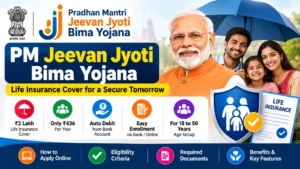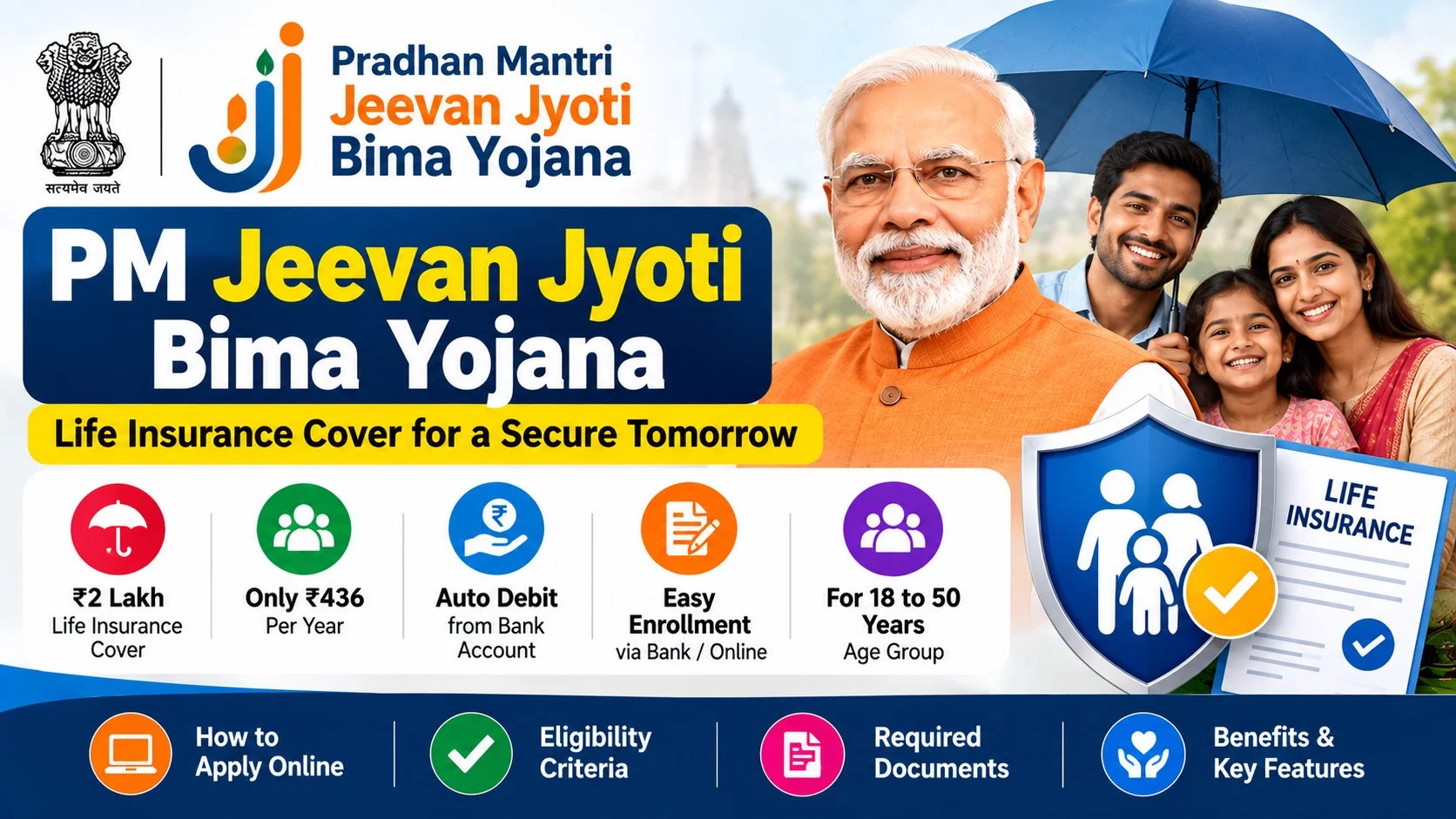

₹436. That’s roughly ₹1.20 per day — less than the cost of a single toffee. And in return, your family gets a guaranteed ₹2 lakh life insurance cover. Sounds too good to be true? It’s not. It’s the Pradhan Mantri Jeevan Jyoti Bima Yojana, and crores of Indians already use it as their first (and sometimes only) life insurance.
✅ This guide is based on official government sources and notifications. Last verified: October 15, 2026. Scheme details, eligibility criteria, and benefit amounts are revised by the government from time to time — always cross-check the latest information on the official portal before applying.
But here’s what most articles won’t tell you: the ₹436 figure is only for the full policy year. Enroll late and you pay less (pro-rata). Miss the auto-debit and your cover lapses silently. And the claim process has a 30-day lien clause that trips up many nominees. This guide covers everything — the parts competitors skip.
PMJJBY Kya Hai? (What is PM Jeevan Jyoti Bima Yojana)
Pradhan Mantri Jeevan Jyoti Bima Yojana (PMJJBY) is a government-backed term life insurance scheme launched to give affordable life cover to every Indian with a bank account. For an annual premium of just ₹436, the nominee receives ₹2 lakh if the insured person dies during the policy year — for death due to any reason, including natural causes, illness, accident, and even suicide.
The scheme runs on a one-year renewable term, from 1st June to 31st May every year. Your bank acts as the master policyholder; LIC of India and other life insurers actually underwrite the risk. You don’t deal with the insurer directly for enrollment — everything happens through your savings bank account or post office account.
PMJJBY Key Facts at a Glance
| Feature | Details |
|---|---|
| Scheme name | Pradhan Mantri Jeevan Jyoti Bima Yojana (PMJJBY) |
| Life cover | ₹2,00,000 (lump sum to nominee) |
| Annual premium | ₹436 per year (full policy year) |
| Entry age | 18 to 50 years (age nearest birthday) |
| Maximum cover age | 55 years (renewable annually after 50) |
| Policy period | 1 June to 31 May (renewable yearly) |
| Premium payment | Auto-debit from savings bank/post office account |
| Medical test | Not required (self-declaration of good health only) |
| KYC | Aadhaar is the primary KYC document |
| Official website | jansuraksha.gov.in |
Jeevan Jyoti Bima Yojana Premium: ₹436 Explained (Pro-Rata Table)
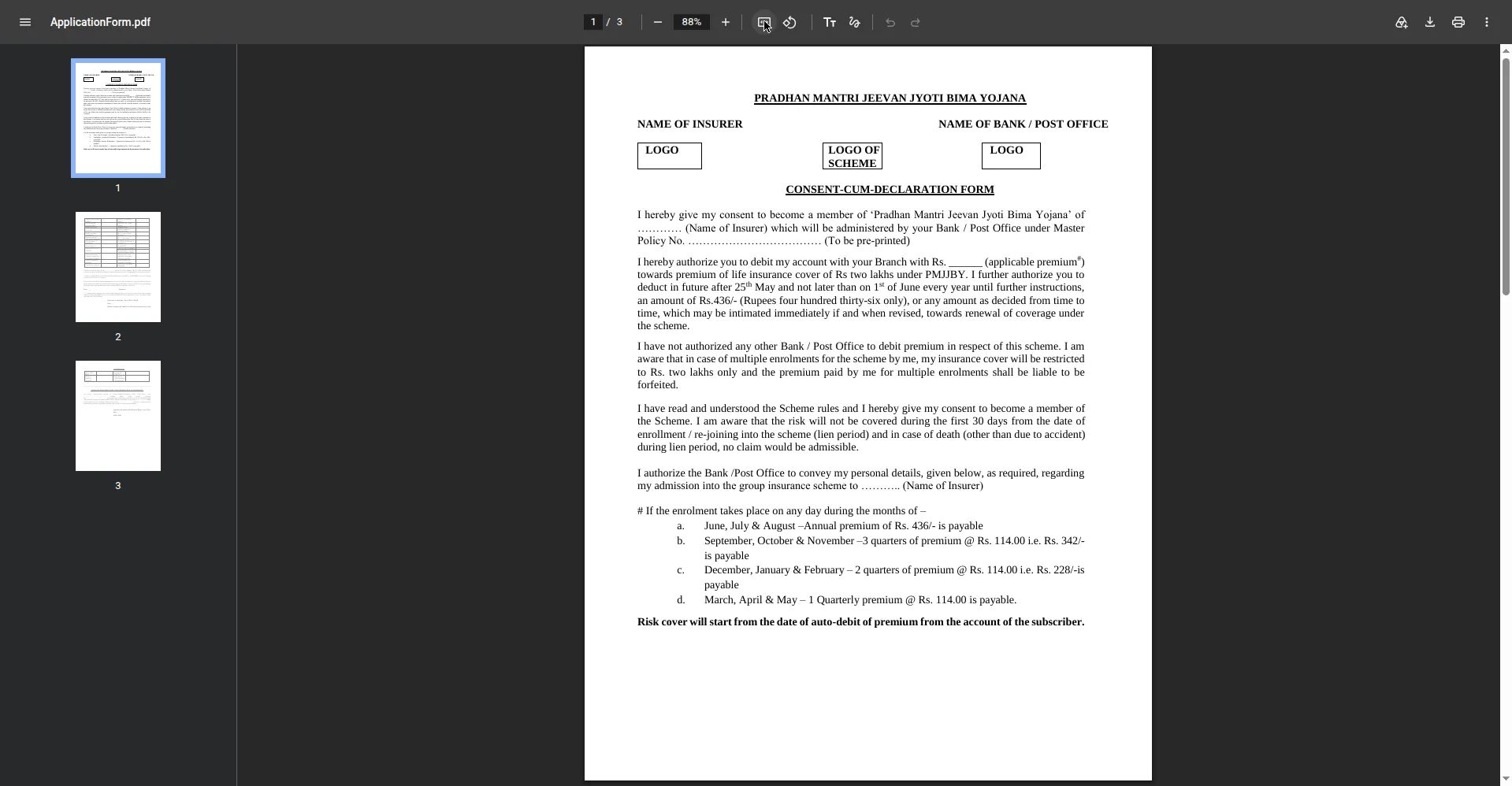
The headline premium is ₹436 per year — but only if you enroll during June to August. Enroll later in the policy year and you pay a reduced, pro-rated premium because your cover period is shorter. Here’s the official pro-rata chart:
| Enrollment Period | Premium Payable | Cover Period |
|---|---|---|
| June – August | ₹436 (full premium) | Till 31 May |
| September – November | ₹342 | Till 31 May |
| December – February | ₹228 | Till 31 May |
| March – May | ₹114 | Till 31 May |
Important: regardless of when you enroll, the policy always ends on 31st May. The next year’s premium (₹436) is auto-debited on or before 31st May for renewal. GST is already included in these amounts — there are no hidden charges.
Let’s put ₹436 in perspective: private term insurance for ₹2 lakh cover typically costs ₹2,000–₹4,000 per year with medical tests and paperwork. PMJJBY costs roughly one-tenth of that, with zero medical tests. That’s why financial planners often call it the best “starter” life insurance in India.
PMJJBY Eligibility Criteria
To join PM Jeevan Jyoti Bima Yojana, you must meet all of these conditions:
- Age: Between 18 and 50 years (age nearest birthday) at the time of enrollment. Once enrolled, you can renew every year until you turn 55.
- Bank account: You must hold an individual savings bank account or post office savings account with a participating bank/post office.
- Auto-debit consent: Written (or digital) consent to auto-debit the annual premium from your account.
- Health declaration: A self-certification of good health at the time of enrollment. No medical examination is needed, but you must declare you are not suffering from any critical illness.
- Aadhaar: Aadhaar is the primary KYC document. Linking Aadhaar to your bank account is strongly recommended.
- One policy rule: Only one PMJJBY subscription is allowed per person, even if you hold multiple bank accounts. If duplicate covers are found, the payout is still capped at ₹2 lakh total and extra premiums are forfeited.
Joint account holders can each enroll separately. NRIs are generally not eligible — the scheme is for resident Indians.
How to Apply for PMJJBY: Online and Offline Methods
Method 1: Apply Online (Net Banking / Mobile Banking)
Most major banks (SBI, HDFC, ICICI, PNB, Bank of Baroda, Canara, Union Bank, etc.) allow PMJJBY enrollment through their digital channels:
- Log in to your bank’s net banking portal or mobile banking app.
- Look for the “Insurance” or “Social Security Schemes” section (the exact name varies by bank).
- Select Pradhan Mantri Jeevan Jyoti Bima Yojana (PMJJBY).
- Verify your details — name, date of birth, Aadhaar number.
- Enter nominee details (name, relationship, date of birth). If the nominee is a minor, you’ll also need to name an appointee.
- Read the scheme terms and give digital consent for annual auto-debit of the premium.
- Submit. Save or screenshot the confirmation reference number.
The premium is debited immediately (or on the next auto-debit date), and your cover starts as per the scheme rules.
Method 2: Apply Offline (Bank Branch / Post Office)
- Visit your home branch (the branch where your savings account is held) or the nearest post office offering the scheme.
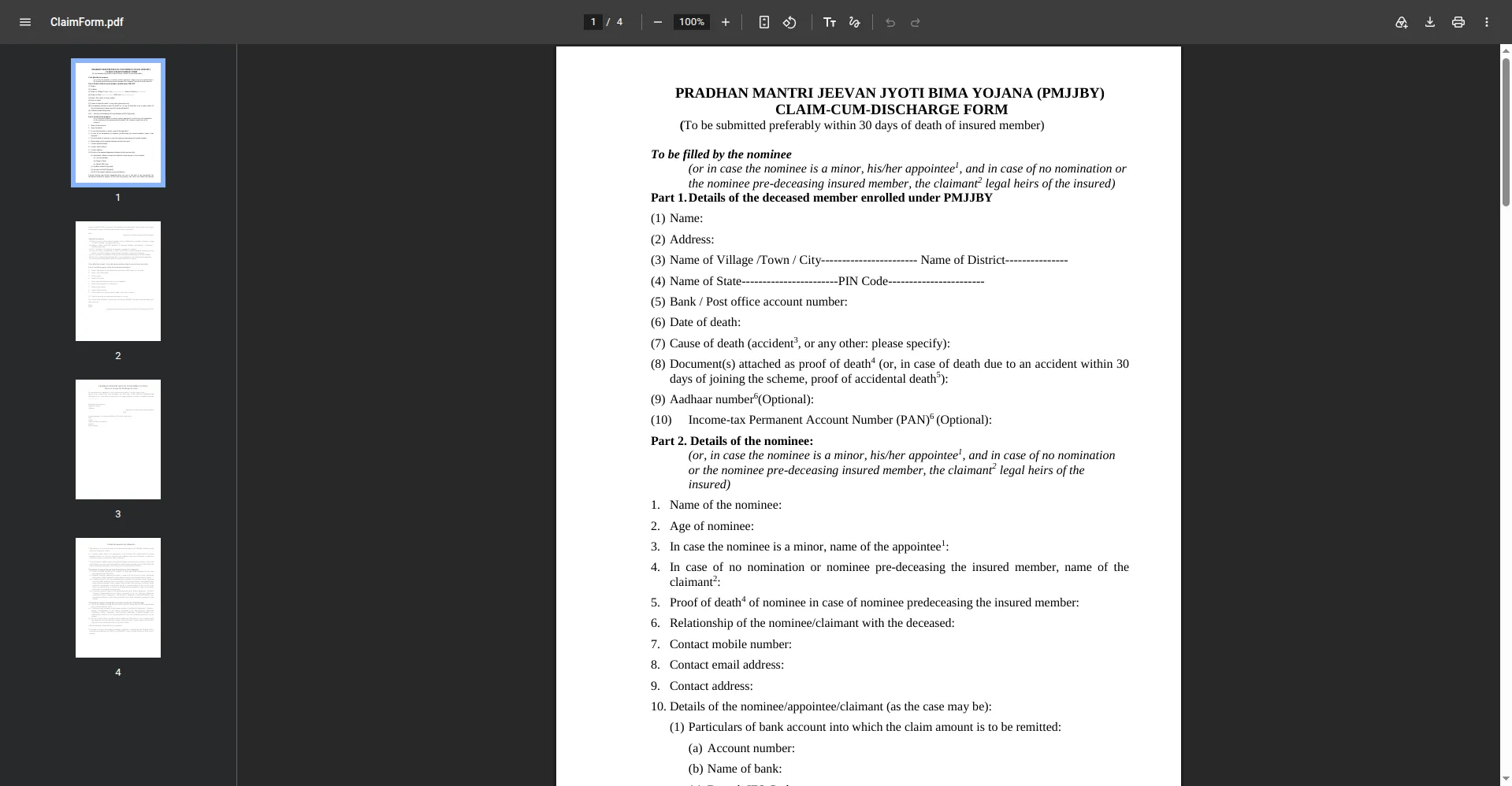
- Ask for the PMJJBY enrollment-cum-consent form. You can also download it from jansuraksha.gov.in and fill it in advance.
- Fill in your personal details, account number, Aadhaar number, and nominee details.
- Sign the consent for auto-debit and the good-health declaration.
- Ensure sufficient balance for the premium. Submit the form at the counter and collect the acknowledgment.
Jeevan Jyoti Bima Yojana Form: What to Fill
The enrollment form asks for: full name, savings account number, Aadhaar number, date of birth, mobile number, nominee name/relationship/DOB, and (if nominee is minor) appointee details. Double-check the nominee’s name spelling — claim rejections most often happen because the nominee name on the form doesn’t match their ID proof.
Auto-Debit Process: How Renewal Works
PMJJBY is designed to be maintenance-free. Once enrolled, the ₹436 premium is automatically debited from your linked account on or before 31st May every year. You don’t need to visit the bank or remember dates.
But there’s a catch most people miss: if your account doesn’t have sufficient balance on the debit date, the auto-debit fails and your cover lapses. The bank typically retries, but if the premium can’t be collected, you’re uninsured until you re-enroll — and re-enrollment restarts the 30-day lien period (explained below).
Practical tips:
- Keep at least ₹500 in the linked account through May-June every year as a buffer.
- If you change your bank account, re-enroll PMJJBY from the new account — the cover doesn’t transfer automatically.
- Check your bank statement each June to confirm the debit happened. A 2-minute check once a year prevents nasty surprises.
PMJJBY vs PMSBY: Key Differences
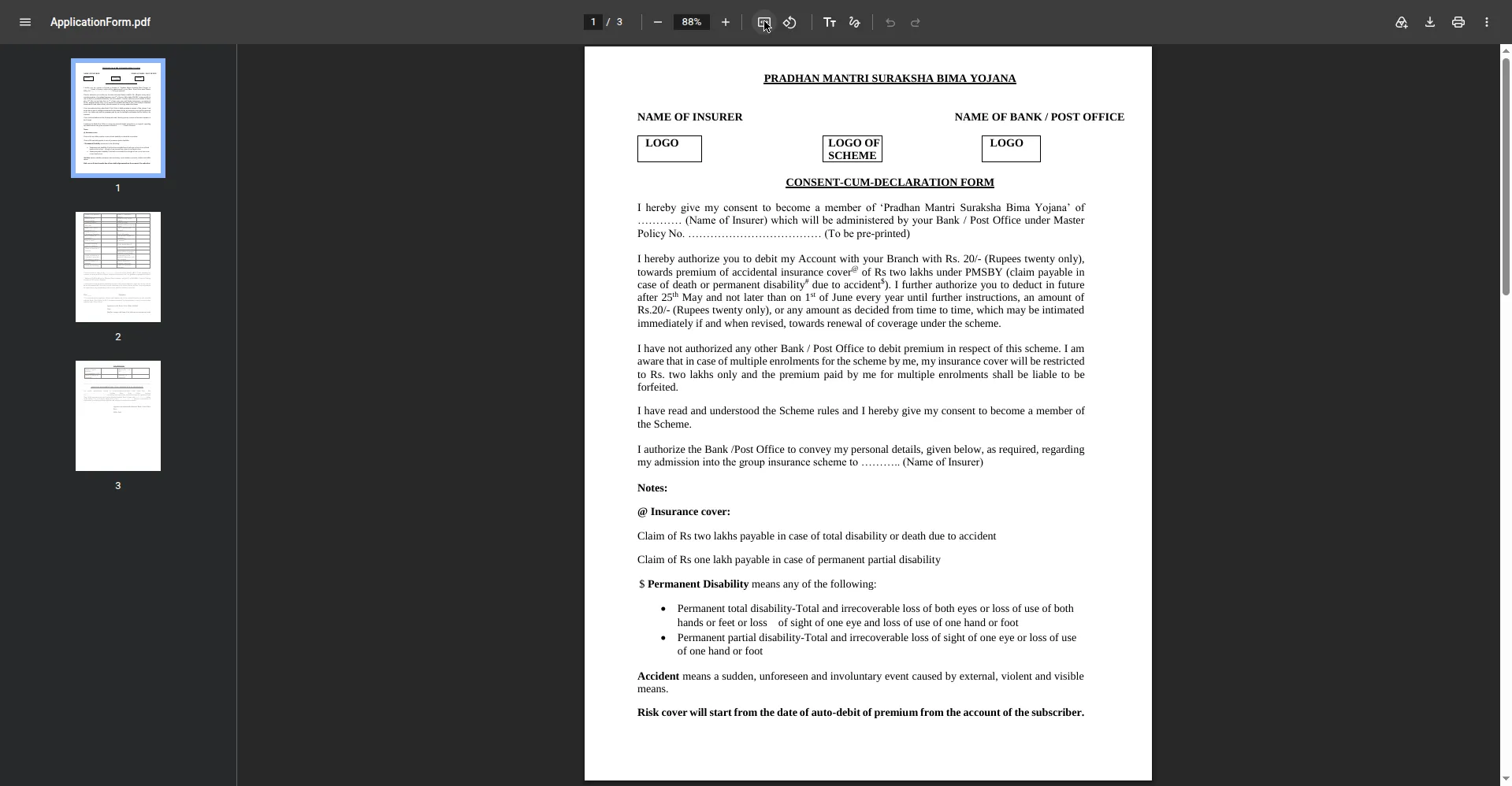
PMJJBY is often confused with PM Suraksha Bima Yojana (PMSBY). They’re sister schemes under Jan Suraksha, but they cover completely different risks:
| Feature | PMJJBY (Jeevan Jyoti) | PMSBY (Suraksha Bima) |
|---|---|---|
| Type | Life insurance | Accident insurance |
| Cover amount | ₹2 lakh (death, any cause) | ₹2 lakh (accidental death); ₹1 lakh (partial disability) |
| Annual premium | ₹436 | ₹20 |
| Entry age | 18–50 years | 18–70 years |
| Cover till age | 55 years | 70 years |
| Waiting period | 30-day lien for non-accidental death | None |
Smart move: enroll in both. Combined premium is just ₹456/year (₹436 + ₹20) for ₹2 lakh life cover plus accident cover. That’s the full Jan Suraksha protection stack for less than ₹40 a month.
PMJJBY Claim Kaise Kare: Step-by-Step Claim Process
This is the section your nominee will need most. Share this article with your nominee or keep a printout with your important documents — it can save your family weeks of running around.
Steps for the Nominee
- Get the death certificate from the municipal authority first. This is the foundation document — nothing moves without it.
- Visit the bank branch where the deceased held the PMJJBY-linked savings account, preferably within 30 days of death.
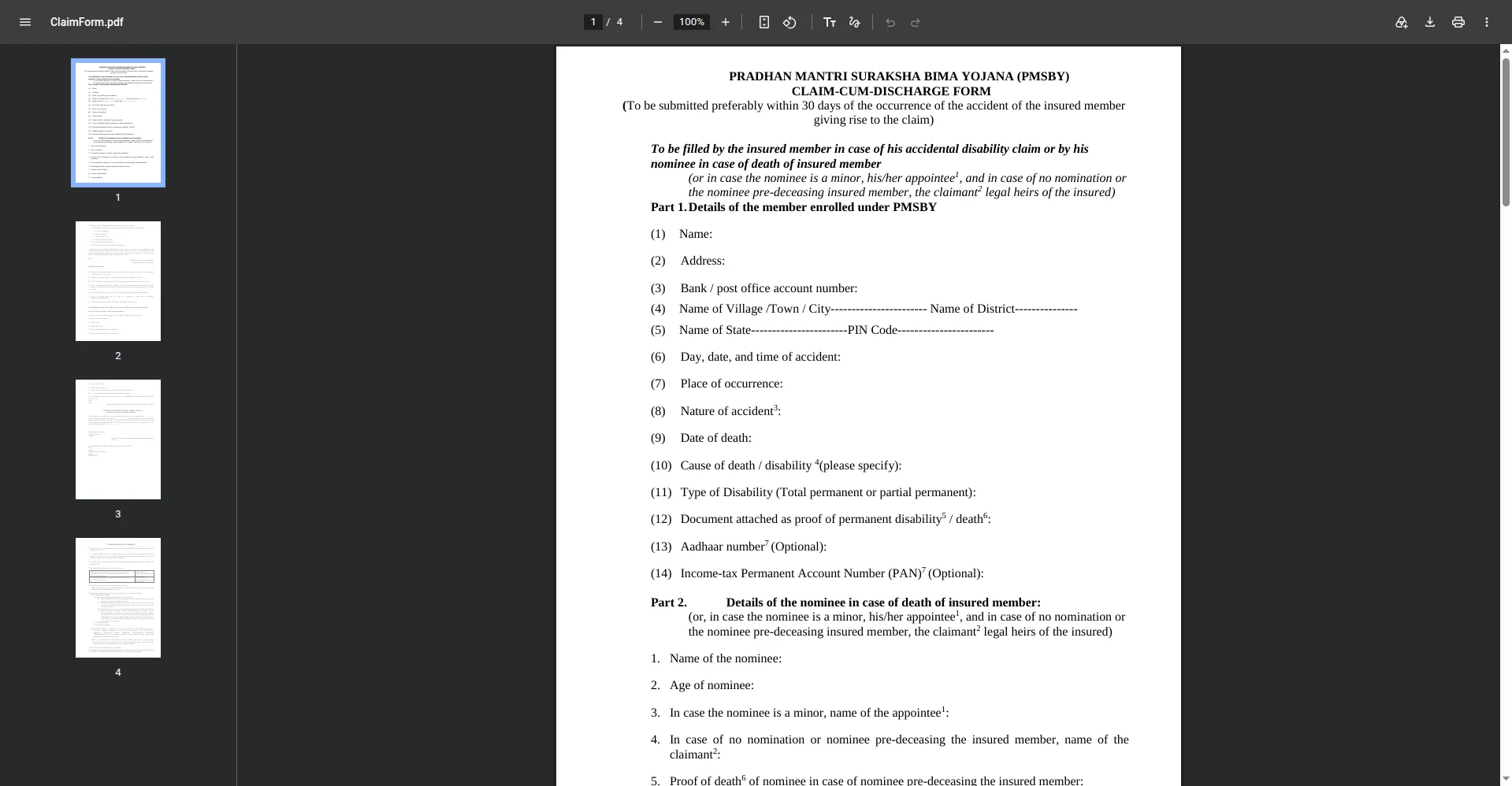
- Collect the claim form and discharge receipt from the branch. These are also downloadable from jansuraksha.gov.in, and available at insurance company branches, hospitals, and BC (Banking Correspondent) outlets.
- Submit: duly filled claim-cum-discharge form + death certificate + discharge receipt + nominee’s cancelled cheque (or bank account details) + KYC documents of the nominee.
Documents Required for PMJJBY Claim
- Death certificate of the insured member (municipal authority)
- Claim-cum-discharge form (duly filled and signed)
- Advance receipt for discharge of claim
- Aadhaar and PAN of the deceased member
- KYC document of the nominee/appointee/claimant
- First two pages of the nominee’s passbook, account statement, or cancelled cheque
- If nominee is a minor: appointee details as given in the enrollment form
- If nominee predeceased the insured: proof of nominee’s death + legal heir proof of the claimant
- For accidental death within the 30-day lien period: FIR, post-mortem report, final police report
What the Bank and Insurer Do (Timelines)
- Bank (max 30 days): Verifies the cover was in force on the date of death (premium was debited), checks the claim form and nominee details against its records, then forwards everything to the insurer’s designated office.
- Insurance company (max 30 days): Verifies the form is complete, confirms no other PMJJBY death claim was already settled for this member through any other account, then releases ₹2 lakh to the nominee’s bank account and informs both nominee and bank.
Total maximum timeline: 60 days from document submission to payout. In practice, clean claims often settle faster.
30-Day Lien Period: The Clause Everyone Misses
For fresh enrollments (first-time joining, or rejoining after a lapse), no claim is payable if death occurs within 30 days of the risk commencement date — except for accidental death. This is called the lien period.
Example: you enroll on 10th June. If death occurs on 25th June due to illness, the claim is not payable. If it’s due to an accident on 25th June, the claim IS payable (accidents are exempt from the lien).
The lien also applies when you rejoin after exiting or after a late renewal. This is why letting the auto-debit fail is costly — you don’t just lose cover, you restart the waiting period when you rejoin.
Exclusions and Termination Conditions
PMJJBY covers death due to any cause — natural, illness, accident, even suicide or murder. The only real “exclusion” is the 30-day lien period above. However, your cover terminates when any of these happen:
- You reach age 55 (cover ends; no renewal possible after 55).
- Your linked bank/post office account is closed.
- Insufficient balance — the premium auto-debit fails and isn’t recovered.
- You hold PMJJBY through multiple accounts — duplicate covers are consolidated and the extra premium is forfeited (payout stays capped at ₹2 lakh).
Tax Benefits of PMJJBY
- Premium: Eligible for deduction under Section 80C of the Income Tax Act (within the ₹1.5 lakh 80C limit).
- Death benefit: The ₹2 lakh paid to the nominee is tax-free under Section 10(10D).
Who Should Take PMJJBY?
- First-time insurance buyers — the cheapest possible entry into life insurance.
- Low and middle-income families — where ₹2 lakh can cover funeral costs, clear small debts, and give the family breathing room.
- Single earning members — dependents get immediate financial support.
- Young earners (18–30) — lock in coverage early; renewals continue till 55.
- Anyone without employer-provided life cover — self-employed, gig workers, farmers, small traders.
PMJJBY isn’t a substitute for a proper term plan if you’re the sole breadwinner with big liabilities (home loan, children’s education). Think of it as layer one — the foundation every family should have, on top of which you can build bigger coverage later. For related government-backed financial protection, also read our guides on PM Mudra Loan Yojana 2026 and Atal Pension Yojana.
Common Mistakes to Avoid
- Not maintaining balance in May: The #1 reason covers lapse. Keep ₹500+ buffer in the linked account every May.
- Enrolling through multiple accounts: Wastes premium — payout is capped at ₹2 lakh anyway.
- Wrong nominee details: Name spelling mismatches between the enrollment form and the nominee’s ID cause claim delays. Verify at enrollment.
- Not informing the nominee: Your family can’t claim what they don’t know exists. Tell your nominee about the policy and where documents are kept.
- Assuming the cover transfers with a new account: It doesn’t. Re-enroll from the new account.
- Ignoring the lien period after rejoining: A lapsed-and-rejoined policy has a fresh 30-day waiting period for non-accidental deaths.
PMJJBY Renewal: What Happens Every Year
Renewal is automatic — the premium is debited on or before 31st May each year and cover continues for the next 1 June–31 May period. You don’t need to sign anything again. The renewal continues until age 55 as long as the account stays funded and active.
If renewal fails due to insufficient balance, you can rejoin anytime by submitting a fresh consent form and paying the applicable pro-rata premium — but remember the 30-day lien period restarts.
How to Check Your PMJJBY Enrollment Status
Many people enroll and then forget — only to discover at claim time that the auto-debit failed. Here’s how to verify your PMJJBY is active:
- Bank statement/passbook: Look for a ₹436 debit entry (usually in May or June) with a narration like “PMJJBY” or “JEEVAN JYOTI”. This is the fastest check.
- Net banking: Open the Insurance or Social Security Schemes section where you enrolled — it typically shows your active PMJJBY subscription with the policy year.
- Visit your home branch: Ask the staff to confirm your PMJJBY enrollment status from their system. Carry your account number and Aadhaar.
- Missed call/SMS alerts: Some banks send SMS confirmations when the annual premium is debited. Check your messages from May–June.
If you find no debit entry and no active subscription, re-enroll immediately using the steps above — don’t assume you’re covered. A two-minute check once a year is the cheapest insurance habit you can build.
🔗 Related Government Schemes
Frequently Asked Questions
1. PMJJBY kya hai in simple words?
PM Jeevan Jyoti Bima Yojana is a government life insurance scheme: pay ₹436 per year from your bank account, and your nominee gets ₹2 lakh if you pass away during the policy year. No medical test needed; enrollment is through your bank or post office.
The full-year premium is ₹436 (for June–August enrollment). Pro-rata premiums apply for later enrollment: ₹342 (Sep–Nov), ₹228 (Dec–Feb), ₹114 (Mar–May). GST is included.
3. PMJJBY claim kaise kare?
The nominee visits the deceased’s bank branch with the death certificate, collects the claim-cum-discharge form, and submits it with KYC documents and a cancelled cheque. The bank forwards it to the insurer within 30 days; the insurer pays within 30 days of receipt. Maximum 60 days total.
4. What is the age limit for PMJJBY?
Entry age is 18–50 years. Once enrolled, you can renew annually until age 55. After 55, the cover terminates and cannot be renewed.
5. Can I get PMJJBY from post office?
Yes. Post office savings account holders can enroll through designated post office counters, with the same ₹436 premium auto-debited from the post office account.
6. How do I check my PMJJBY status?
Check your bank statement or passbook for the annual ₹436 debit (usually in May/June), or ask your home branch to confirm your PMJJBY enrollment status. Many banks also show it under the insurance section of net banking.
Found this guide useful? The Jan Suraksha family also includes accident cover at just ₹20/year — and if you’re planning bigger financial goals, our PM Mudra Loan Yojana guide explains collateral-free business loans up to ₹20 lakh, while Atal Pension Yojana covers guaranteed monthly pension after 60.