Are your social media posts getting likes from the same five people — your friends, your cousin, and that one loyal follower? You post regularly, you use hashtags, you even tried trending audio. Still, the reach stays flat. Chances are, you’re making one (or more) of these common social media mistakes without realising it.
Here’s the uncomfortable truth: most accounts don’t fail because the algorithm hates them. They fail because of fixable habits — inconsistent posting, ignoring comments, treating every platform the same, or publishing content that screams “buy from me” on loop. The good news? Every mistake below has a practical fix you can apply this week.
This guide covers 12 social media mistakes that quietly kill reach and engagement on Instagram, Facebook, LinkedIn, X, and YouTube in 2026 — plus exactly how to fix each one.
1. Posting Inconsistently
The Mistake
You post five times in one week, feel motivated, then vanish for a month. When you return, your reach has cratered and even your existing followers barely see your posts. Sound familiar?
Why It Hurts
Social platforms reward predictable behaviour. When you post regularly, the algorithm learns who engages with your content and keeps showing it to them. Long gaps break that pattern — the platform essentially has to “re-learn” your audience from scratch. Worse, your followers forget you exist. Out of sight really is out of mind on social media.
How to Fix It
- Build a content calendar. Plan 2–4 weeks of posts in advance using a simple spreadsheet or a free tool like Notion or Trello.
- Use a scheduler. Meta Business Suite (free) handles Facebook and Instagram scheduling. Buffer and Hootsuite offer free plans that cover multiple platforms.
- Pick a sustainable rhythm. Three quality posts a week, every week, beats thirty posts in one week followed by silence. Start small and scale only when the routine feels easy.
- Batch your content. Shoot four Reels in one Sunday afternoon instead of scrambling every evening. Batching is how consistent creators actually stay consistent.
2. Treating Social Media as a Broadcast Channel
The Mistake
You publish posts but never reply to comments, never answer DMs, and never engage with anyone else’s content. Your account is a megaphone, not a conversation.
Why It Hurts
Every major platform in 2026 ranks “meaningful interaction” heavily. Instagram, Facebook, and LinkedIn all push content from accounts that generate back-and-forth conversation. A post with 20 thoughtful replies will outrank a post with 200 passive likes. When you ignore your audience, you also train them to stop engaging — why comment if the creator never responds?
How to Fix It
- Reply to every comment in the first hour. Early engagement signals tell the algorithm your post is worth distributing further.
- Answer DMs daily. Even a quick emoji reaction is better than silence. For business accounts, set up auto-replies for common questions on Instagram and Facebook.
- Engage before you post. Spend 15 minutes commenting genuinely on posts in your niche before publishing your own. It warms up your account activity and builds relationships.
- Ask questions that invite answers. End captions with a specific question (“Which of these two would you pick?”) rather than a generic “let me know your thoughts.”
3. Selling in Every Single Post
The Mistake
Every post is a product photo, a discount announcement, or a “link in bio to buy” push. Your feed reads like a catalogue, not a community.
Why It Hurts
People open Instagram or YouTube to be entertained, educated, or inspired — not to be sold to. Accounts that only promote see engagement drop, unfollows rise, and eventually the algorithm stops showing their posts because nobody interacts with them. Trust is the currency of social selling, and you can’t build trust with a feed that’s 100% pitch.
How to Fix It
- Follow the 80/20 rule. Make 80% of your content useful or entertaining (tips, behind-the-scenes, stories, humour) and only 20% directly promotional.
- Sell through stories, not just posts. Share a customer result, a quick tutorial using your product, or a “day in the life” clip. Story-driven selling feels natural; banner-style selling feels like an ad.
- Give before you ask. Teach something valuable for free — a quick SEO tip, a styling hack, a recipe step — and mention your product only as the natural next step. Readers who learned from you convert far better than readers who were shouted at.
4. Ignoring Analytics Completely
The Mistake
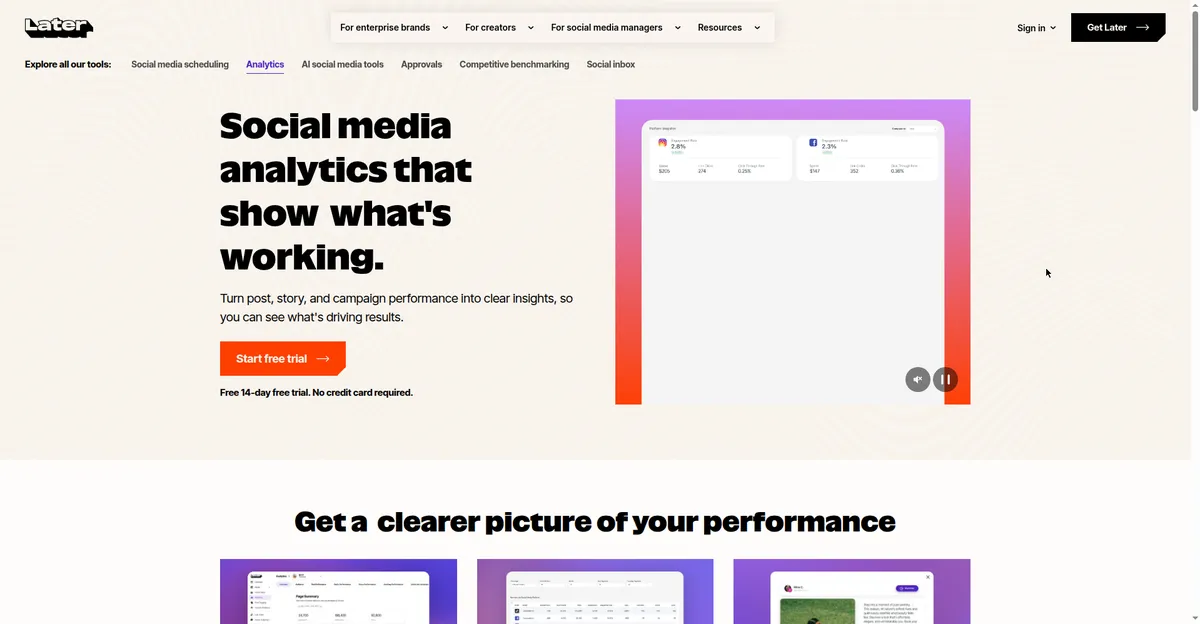
You post content week after week but never open Instagram Insights, YouTube Studio, or LinkedIn analytics. You have no idea which posts worked, what time your audience is online, or who even follows you.
Why It Hurts
Without data, you’re guessing. You might keep making carousel posts that nobody saves while your Reels quietly outperform everything — and you’d never know. Analytics reveal patterns: which topics get shares, which formats get saves, when your audience is actually scrolling. Creators who review analytics monthly improve steadily; creators who don’t repeat the same underperforming content for years.
How to Fix It
- Check native analytics monthly. Instagram Insights, Facebook Page Insights, YouTube Studio, and LinkedIn analytics are all free and built in. Look at reach, saves, shares, and profile visits — not just likes.
- Double down on what works. If “mistakes to avoid” posts get 3x the saves of your other content, make more of them. This sounds obvious, but most people never look, so they never learn.
- Track one metric per goal. Growing a newsletter? Watch link clicks. Building brand awareness? Watch reach and shares. Vanity metrics like follower count matter far less than the metric tied to your actual goal.
- Note posting times. Check when your followers are most active (visible in Instagram Insights under Audience) and schedule your best content for those windows.
5. Copy-Pasting the Same Post Everywhere
The Mistake
You write one caption, attach one image, and blast it identically to Instagram, Facebook, LinkedIn, X, and YouTube. Same text, same hashtags, same format.
Why It Hurts
Each platform has its own culture, format, and audience expectations. A 2,000-word-style LinkedIn post looks absurd as an Instagram caption. Hashtags that work on Instagram look spammy on LinkedIn. Vertical video thrives on Reels and Shorts but flops as a Facebook link post. When content feels “wrong” for the platform, people scroll past — and the algorithm notices the lack of engagement.
How to Fix It
- Adapt, don’t duplicate. One idea can become five native posts: a Reel for Instagram, a text thread for X, a professional breakdown for LinkedIn, a community post for Facebook, and a Short for YouTube.
- Respect each platform’s format. Instagram: strong visuals + concise captions + Reels. LinkedIn: value-driven text posts and carousels. X: punchy, timely takes. YouTube: searchable titles and thumbnails that work at small sizes.
- Write platform-native CTAs. “Save this for later” works on Instagram; “Repost if you agree” fits X; “Comment your experience below” suits LinkedIn. Match the call-to-action to the platform’s behaviour.
6. Buying Followers or Using Engagement Pods
The Mistake
Tempted by services promising “10,000 real followers for ₹999”? Or joining Telegram/WhatsApp groups where members like and comment on each other’s posts to game the algorithm?
Why It Hurts
Fake followers never like, comment, share, or buy. They tank your engagement rate — the ratio platforms actually use to judge content quality. An account with 50,000 fake followers and 100 likes per post looks far worse to the algorithm than an account with 2,000 real followers and 300 likes per post. Engagement pods are equally risky: platforms detect inauthentic interaction patterns, and sudden coordinated likes from unrelated accounts can trigger reduced distribution or even account restrictions.
How to Fix It
- Grow slow and real. A hundred genuine followers who care about your niche beat ten thousand ghosts every time — for reach, for brand deals, and for sales.
- Audit your existing audience. If you bought followers in the past, remove obvious fake accounts (no profile photo, zero posts, gibberish usernames). Instagram lets you remove followers manually.
- Earn engagement honestly. Collaborations, consistent value posts, and genuine community interaction build the kind of audience that actually converts. There is no shortcut that survives contact with the algorithm.
7. Publishing Raw AI Content Without Editing
The Mistake
With AI writing tools everywhere in 2026, many accounts now publish AI-generated captions, scripts, and posts word-for-word — no editing, no fact-checking, no personal touch. The result is a feed full of generic, slightly-off content that all sounds the same.
Why It Hurts
Readers can smell unedited AI text instantly: the repetitive structure, the vague claims, the formulaic wrap-up energy. Worse, AI confidently invents facts, statistics, and quotes. Publishing those destroys trust the moment one follower spots an error. Platforms are also getting better at detecting low-effort synthetic content, and audiences increasingly skip anything that feels mass-produced.
How to Fix It
- Use AI as a draft assistant, not a publisher. Let it outline ideas or suggest hooks, then rewrite in your own voice with real specifics.
- Fact-check everything. Every statistic, date, and claim in AI output needs verification before it goes live — especially for YMYL topics like finance or health.
- Add what AI can’t. Your opinion, your experience with a tool, a screenshot of your actual results, a customer story. That’s the “information gain” that makes content worth reading — and ranking.
8. Ignoring Short-Form Video
The Mistake
You only post static images and text while Reels, YouTube Shorts, and TikTok dominate everyone’s feed. “Video isn’t my thing,” you tell yourself, as video-first creators in your niche pull away.
Why It Hurts
Short-form video gets disproportionate distribution on every major platform right now. Instagram pushes Reels to non-followers through the Explore page; YouTube Shorts is the fastest discovery surface on the platform; even LinkedIn now prioritises native video. Sticking to static posts means voluntarily giving up the highest-reach format available — like refusing to use email in 2010 because you prefer letters.
How to Fix It
- Start embarrassingly simple. Talking-head videos shot on your phone outperform polished productions when the content is useful. Good lighting (a window) and clear audio matter more than fancy editing.
- Repurpose what you have. Turn your best-performing text posts into 30-second scripts. One blog post can become five Shorts — that’s a month of video content from a single article.
- Hook in the first 3 seconds. Open with the payoff (“Stop doing X on Instagram”) not the preamble (“Hey guys, welcome back to my channel”). Retention in the opening seconds decides everything.
- Caption everything. Most short video is watched on mute. Burned-in captions aren’t optional anymore.
9. Having No Clear Niche or Positioning
The Mistake
Monday: fitness tips. Wednesday: stock market hot takes. Friday: food photos. Your profile bio says “DM for collabs” but nobody can tell what you’d actually collaborate on.
Why It Hurts
People follow accounts for a clear promise: “this account teaches me X” or “this account entertains me with Y.” When your content jumps randomly between topics, no single audience segment gets consistent value, so nobody sticks around. Brands face the same problem — a confused feed can’t attract the right followers, and it definitely can’t attract sponsors, who pay for access to a defined audience.
How to Fix It
- Pick one lane for 90 days. Choose the intersection of what you know, what you enjoy, and what an audience wants. Commit to it for a full quarter before judging results.
- Rewrite your bio as a promise. Instead of “Lifestyle | Foodie | Traveller,” try “Simple vegetarian recipes for busy professionals — new every Tuesday.” Specific beats vague.
- Use content pillars. Define 3–4 recurring themes within your niche (e.g., for a finance creator: budgeting tips, investment basics, money mistakes, Q&A). Pillars keep you focused while giving variety.
10. Inconsistent Branding Across Profiles
The Mistake
Your Instagram handle is @rahul_fitness07, your YouTube channel is “Rahul Vlogs,” your profile photo is a blurry group picture from 2019, and your bio hasn’t been updated since you started. Every platform looks like it belongs to a different person.
Why It Hurts
Trust starts with recognition. When someone discovers you on a Reel and searches your name on YouTube, mismatched branding creates doubt — “is this the same person?” Inconsistent visuals also signal amateurism to potential brand partners, who check your profiles before offering deals. First impressions on social happen in about two seconds; messy branding wastes them.
How to Fix It
- Unify your handle. Use the same (or as close as possible) username everywhere. If your ideal handle is taken, add a consistent modifier like “the,” “hq,” or your niche keyword.
- Use one clear profile photo. A well-lit face photo (for personal brands) or a clean logo (for businesses) — the same image on every platform.
- Write a bio that converts. Formula: who you help + how + proof + CTA. Example: “Helping beginners invest in mutual funds 📈 | 50K learners | 👇 Free guide.”
- Pin your best content. Instagram, TikTok, and X all let you pin posts. Pin 3 pieces that instantly show new visitors what you’re about.
11. Ignoring SEO on Social Platforms
The Mistake
You treat social captions as throwaway text while people increasingly use Instagram, YouTube, and TikTok as search engines — typing queries like “budget skincare routine” directly into the app’s search bar.
Why It Hurts
Social SEO is real and growing. YouTube is the world’s second-largest search engine, and Instagram and TikTok now rank keyword-optimised content in their search results. A Reel titled “5-minute paneer recipe” with those words in the caption, on-screen text, and hashtags can pull views for months from search alone. Creators who ignore keywords leave that entire discovery channel on the table.
How to Fix It
- Research keywords per platform. Type your topic into each app’s search bar and note the autocomplete suggestions — those are real user queries.
- Put keywords in titles and captions. On YouTube, front-load the keyword in the title. On Instagram and TikTok, include it naturally in the first line of the caption and in on-screen text.
- Write descriptive alt text. Instagram lets you add alt text to photos (Advanced Settings). It helps accessibility and gives the algorithm more context about your content.
- Use 3–5 relevant hashtags, not 30. Keyword-rich, niche hashtags outperform generic walls of tags like #love #instagood #followme in 2026.
12. Quitting Before the Algorithm Notices You
The Mistake
You post consistently for three weeks, see minimal growth, conclude “social media doesn’t work for me,” and quit — right before the compounding would have kicked in.
Why It Hurts
Every successful creator has a “valley of disappointment” phase: months of good content with little traction. Algorithms need time to find your audience, and audiences need repeated exposure before they follow. Most people quit during this valley, which is exactly why pushing through it is such a competitive advantage. The creators winning in your niche aren’t necessarily more talented — they just didn’t stop at week three.
How to Fix It
- Commit to a 90-day run. Judge nothing before 90 days of consistent, improving output. Track progress weekly, but evaluate quarterly.
- Improve one thing each week. Week 1: better hooks. Week 2: cleaner audio. Week 3: stronger CTAs. Small weekly upgrades compound into a dramatically better account.
- Study one viral post in your niche weekly. Reverse-engineer why it worked — the hook, the format, the timing — and adapt the principle (never copy) to your content.
Social Media Mistakes by Platform: Quick Reference
Different platforms punish different mistakes. Use this table to spot-check your strategy per network:
| Platform | Biggest Mistake | What to Do Instead |
|---|---|---|
| Only posting static photos, ignoring Reels | Post 3–4 Reels weekly; use keyword-rich captions | |
| Sharing only external links (kills reach) | Post native video and photos; use links sparingly in comments | |
| Overly corporate, jargon-filled posts | Write personal, story-driven posts with a clear takeaway | |
| X (Twitter) | Only broadcasting, never replying | Reply daily; quote-post with your take on trending topics |
| YouTube | Weak titles and thumbnails | Keyword-first titles; high-contrast thumbnails with 3–4 words max |
Quick Self-Audit: Are You Making These Mistakes?
Run through this checklist honestly. Every “no” is a growth lever waiting to be pulled:
- ☐ Do you post on a consistent schedule (at least 3x per week)?
- ☐ Do you reply to comments within 24 hours?
- ☐ Is less than 25% of your content directly promotional?
- ☐ Have you checked your analytics in the last 30 days?
- ☐ Do you adapt content for each platform instead of copy-pasting?
- ☐ Are all your followers real (no purchased followers)?
- ☐ Do you edit and fact-check AI-assisted content before publishing?
- ☐ Are you publishing short-form video weekly?
- ☐ Can a stranger tell your niche from your bio in 5 seconds?
- ☐ Have you posted consistently for at least 90 days without quitting?
If you ticked fewer than 7, start with mistakes #1, #2, and #4 — consistency, engagement, and analytics are the highest-impact fixes for most accounts.
Frequently Asked Questions
Inconsistency. Most beginners post enthusiastically for two weeks, then disappear. Pick a schedule you can sustain for 90 days — even if it’s just three posts a week — and protect it like an appointment. Consistency beats intensity on every platform.
It depends on the platform: Instagram and Facebook do well with 3–5 posts per week (including Reels), X rewards daily activity, LinkedIn works with 2–4 quality posts weekly, and YouTube favours 1–2 videos per week done well over daily low-effort uploads. Quality and consistency matter more than raw volume.
Yes, but differently than before. Use 3–5 specific, niche hashtags rather than 30 generic ones. On Instagram and TikTok, hashtags now function more like SEO keywords — they help the algorithm categorise your content. Keyword-rich captions and on-screen text matter at least as much.
No. Being mediocre on six platforms loses to being excellent on two. Pick the 1–2 platforms where your target audience actually spends time, master them, and only expand once you have a repeatable system. You can always repurpose winning content to new platforms later.
Why is my engagement dropping even though I’m posting regularly?
Common causes: your content stopped evolving (same format fatigue), you’re not engaging back (see mistake #2), you’re over-promoting, or the platform shifted distribution (e.g., toward video). Check your analytics for which formats declined, audit against the 12 mistakes above, and test one change at a time.
No — but the bar is higher. Generic content no longer breaks through; specific, genuinely useful content still does. New accounts grow every day by picking a clear niche, posting consistently, and engaging authentically. The algorithm doesn’t care when you started; it cares whether people engage with what you post now.
Conclusion: Fix the Mistakes, Keep the Momentum
You don’t need a viral moment to win on social media — you need to stop doing the things that quietly hold you back. Pick the three mistakes from this list that hit closest to home and fix them this week: set a posting schedule, reply to every comment, and check your analytics.
Small, consistent corrections compound. The accounts dominating your niche a year from now won’t be the ones with the most talent or budget — they’ll be the ones that fixed their mistakes and refused to quit.
Your next step: run the 10-point self-audit above, circle your three weakest areas, and make a 30-day plan to fix them. Then come back and tell me in the comments which mistake was costing you the most — I’d genuinely like to know.
Want to go deeper on growing the right way? Read our guide on how to start a blog in 2026 to turn your social audience into an asset you actually own, and check how to rank without backlinks if search traffic is your next frontier.
Quick Recap: 12 Social Media Mistakes and Their Fixes
Let’s recap the 12 social media mistakes we covered and how fixing these social media mistakes transforms your results. Each of these social media mistakes is common, but avoiding social media mistakes like these sets you apart from 90% of creators making the same social media mistakes daily.
- Mistake 1 – No clear strategy: Fix this social media mistake by defining one goal per platform.
- Mistake 2 – Inconsistent posting: This social media mistake kills momentum. Use a scheduler to fix it.
- Mistake 3 – Ignoring analytics: One of the costliest social media mistakes. Check Meta Business Suite weekly.
- Mistake 4 – Buying followers: This social media mistake destroys trust permanently.
- Mistake 5 – Same content everywhere: A lazy social media mistake. Tailor content per platform.
- Mistake 6 – No engagement: The silent social media mistake. Reply to every comment.
- Mistake 7 – Raw AI content: A 2026 social media mistake. Always humanize AI drafts.
- Mistake 8 – Ignoring video: Skipping reels is a growth-killing social media mistake.
- Mistake 9 – No social SEO: This social media mistake makes you invisible in search.
- Mistake 10 – Over-promotion: The fastest unfollow-triggering social media mistake.
- Mistake 11 – No content pillars: Random posting is a directionless social media mistake.
- Mistake 12 – Giving up early: The final social media mistake – quitting before compounding kicks in.
Free Tools to Avoid Social Media Mistakes
These free tools help you avoid the social media mistakes listed above:
- Buffer – Schedule posts consistently and avoid the social media mistake of irregular posting.
- Canva – Create professional visuals so the social media mistake of low-quality graphics never happens.
- Meta Business Suite – Free analytics to catch the social media mistake of ignoring data.
- Instagram Help Center – Official guides to avoid platform-specific social media mistakes.
Remember: every expert was once a beginner making these exact social media mistakes. The difference is they learned from each social media mistake and kept going. Start fixing one social media mistake per week, and in 3 months your social media mistakes will be stories you laugh about – not problems holding you back.