If you earn your living with your hands — as a carpenter, tailor, blacksmith, potter, or barber — you already know the hardest part is not the work itself. It is getting the right tools, the right training, and affordable credit to grow. The PM Vishwakarma Yojana was built for exactly this problem: it gives traditional artisans a ₹15,000 toolkit, free skill training with a daily stipend, and collateral-free loans up to ₹3 lakh at just 5% interest.
✅ This guide is based on official government sources and notifications. Last verified: October 13, 2026. Scheme details, eligibility criteria, and benefit amounts are revised by the government from time to time — always cross-check the latest information on the official portal before applying.
In this guide, you will find everything about the PM Vishwakarma Yojana 2026: the complete list of 18 covered trades, the full benefit breakdown, who can apply, what documents you need, how to register through a CSC, and how to track your application. I have also compared it with Gujarat’s Manav Garima Yojana so you can see which scheme fits your situation better.
What Is PM Vishwakarma Yojana?
PM Vishwakarma Yojana is a Central Sector Scheme launched by the Government of India on 17 September 2023 — Vishwakarma Jayanti — and run by the Ministry of Micro, Small and Medium Enterprises (MSME). It is designed for traditional artisans and craftspeople who work with their hands and tools in 18 specified family-based trades.
The idea is simple but powerful. Millions of skilled workers — carpenters, blacksmiths, potters, tailors, masons — keep India’s traditional crafts alive, yet most work in the unorganised sector with outdated tools, no formal training certificates, and no access to cheap credit. The PM Vishwakarma Yojana changes that by giving them formal recognition (a certificate and ID card), modern skill training, a toolkit grant, and affordable loans.
The scheme runs for five years, from FY 2023-24 to FY 2027-28, with a total budget of ₹13,000 crore. Registrations remain open until 31 March 2028. As of early 2026, more than 2.72 crore applications had been received — which tells you just how large the demand is.
PM Vishwakarma Yojana 2026: Key Highlights
| Point | Details |
|---|---|
| Scheme name | PM Vishwakarma Yojana |
| Launched by | Government of India, Ministry of MSME |
| Launch date | 17 September 2023 (Vishwakarma Jayanti) |
| Budget | ₹13,000 crore (2023-24 to 2027-28) |
| Trades covered | 18 traditional family-based trades |
| Toolkit incentive | ₹15,000 e-voucher after basic training |
| Training stipend | ₹500 per day during training |
| Loan support | Up to ₹3 lakh (₹1L + ₹2L) at 5% interest, collateral-free |
| Valid till | 31 March 2028 |
| How to apply | Through Common Service Centre (CSC) with Aadhaar biometric — free |
Benefits: What Do You Actually Get?
The PM Vishwakarma Yojana is not a single benefit — it is a package of six components that work together. Here is what each one means for you in practical terms.
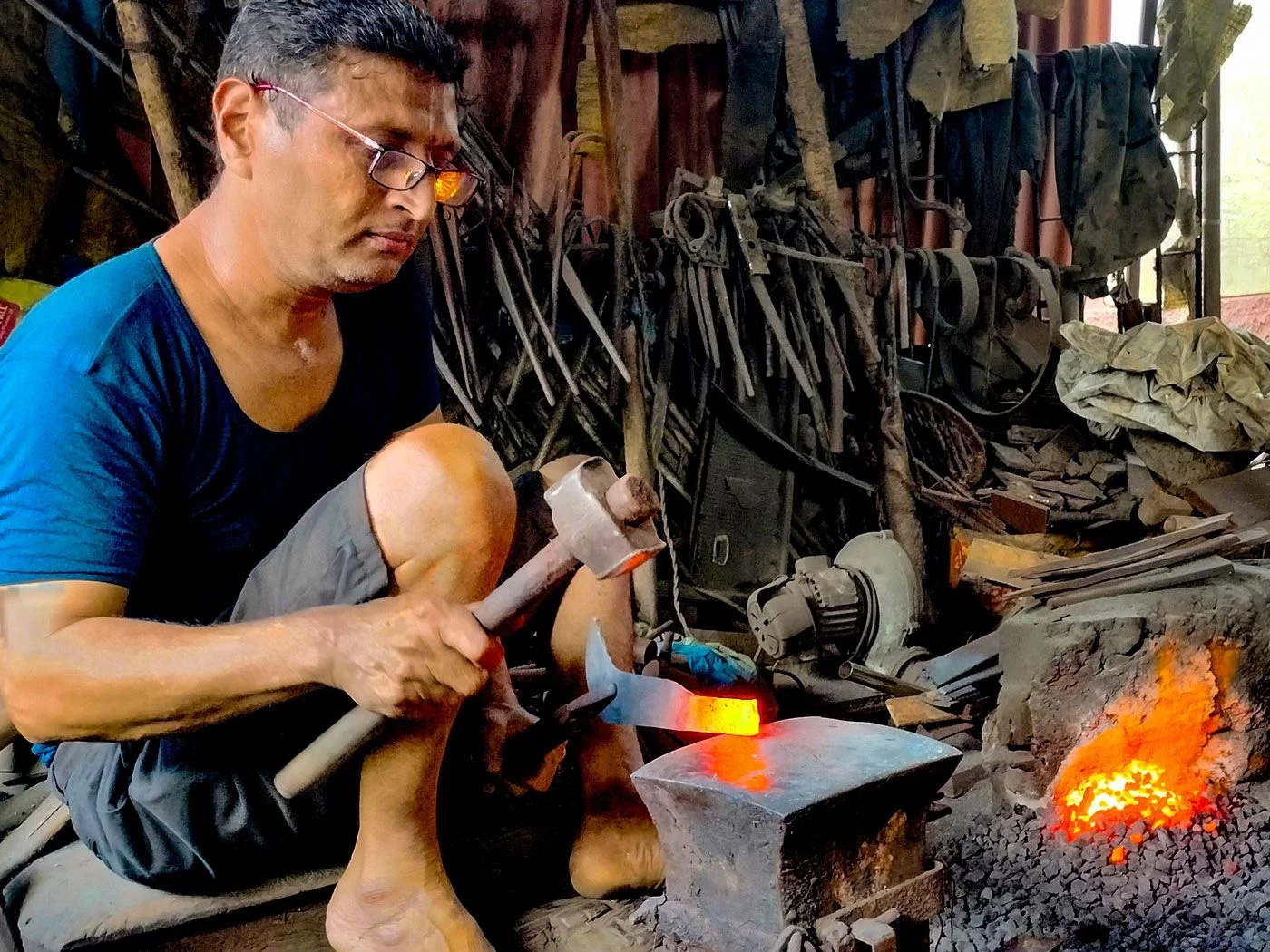
1. Recognition: PM Vishwakarma Certificate and ID Card
After your registration is approved, you receive a PM Vishwakarma Certificate and a photo ID card. This is formal recognition of your craft — something most traditional artisans have never had. Banks may ask for these documents when you apply for the loan, so keep them safe.
2. Skill Training with ₹500/Day Stipend
The scheme provides free skill training in two stages. Basic training runs 5 to 7 days (about 40 hours) and covers modern techniques, tool handling, and quality standards for your trade. If you want to go further, an optional advanced training of 15 days (120 hours) is available. During training days, you get a stipend of ₹500 per day — so you do not lose income while learning.
3. Toolkit Incentive: ₹15,000 E-Voucher
After completing basic training, you receive an e-voucher worth ₹15,000 to buy modern tools for your trade. This is the benefit most artisans notice first. A tailor can put it toward a modern sewing machine; a carpenter toward power tools; a blacksmith toward an upgraded forge setup. The voucher is earmarked for tools — it is meant to raise your productivity, not to be spent elsewhere.
4. Collateral-Free Loans Up to ₹3 Lakh at 5%
This is the financial core of the PM Vishwakarma Yojana. You can get enterprise development loans in two tranches: up to ₹1 lakh first (repayable in 18 months), and after a good repayment record, up to ₹2 lakh more (repayable in 30 months). The interest rate for you is just 5% per annum — the government pays an 8% interest subvention directly to the bank on your behalf. No collateral and no guarantee fee are required.
5. Digital Transaction Incentive
You earn ₹1 for every digital transaction you do, up to 100 transactions per month. This nudges artisans toward UPI and digital payments, which also builds a transaction history that helps with future credit.
6. Marketing Support
The scheme helps you sell beyond your local market — through branding and packaging support, onboarding to e-commerce platforms like GeM, and participation in trade fairs such as the PM Vishwakarma Haat events.
The 18 Trades: Complete List
This is the section most websites rush through, but it matters the most — because if your trade is not on this list, you cannot apply. The PM Vishwakarma Yojana covers exactly 18 traditional, family-based trades. Here they are, all of them:
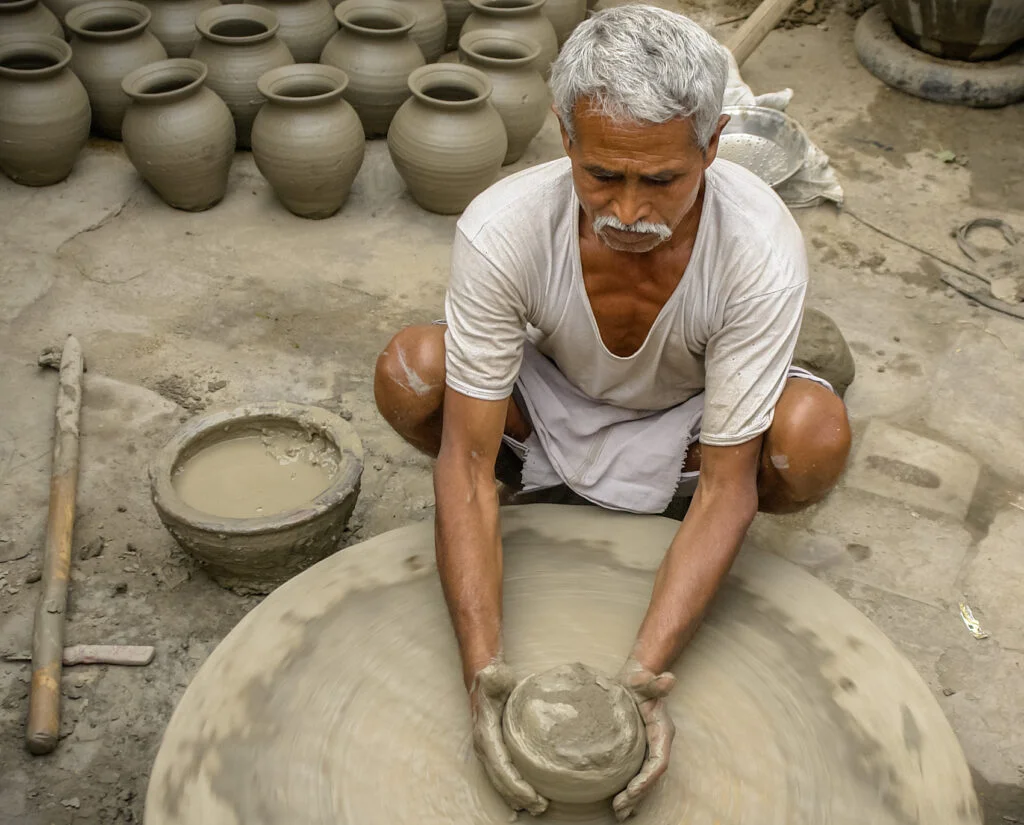
Wood, Boat and Construction Trades
- Carpenter (Suthar/Badhai) — woodwork, furniture, doors, and structural timber work
- Boat Maker — traditional wooden boat building and repair
- Mason (Rajmistri) — brick, stone, and concrete construction work
Metal, Iron and Stone Trades
- Armourer — traditional arms and metal craft work
- Blacksmith (Lohar) — forging, shaping, and repairing iron and steel tools
- Hammer and Tool Kit Maker — making hammers, chisels, and hand tools
- Locksmith — locks, keys, and security hardware
- Sculptor (Moortikar)/Stone Carver — stone sculpture and carving
- Stone Breaker — quarrying and stone breaking work
Gold, Clay and Leather Trades
- Goldsmith (Sonar/Sunar) — jewellery making and repair in gold and silver
- Potter (Kumhaar) — clay pots, earthenware, and terracotta work
- Cobbler (Charmkar)/Footwear Artisan — shoes, sandals, and leather footwear
Textile, Basket and Daily-Service Trades
- Tailor (Darzi) — stitching, garment making, and alterations
- Weaver (Bunkar) — handloom weaving and textile craft (listed in official trade grouping)
- Basket/Mat/Broom Maker/Coir Weaver — baskets, mats, brooms, and coir products
- Doll & Toy Maker (Traditional) — traditional handmade dolls and toys
- Barber (Naai) — hair cutting and grooming services
- Garland Maker (Malakaar) — flower garlands and decorative items
- Washerman (Dhobi) — laundry and cloth washing services
Note: official listings group these as 18 trades; some sources also mention fishing net maker within the trade families. When you register at the CSC, the operator will show you the exact trade list on the portal — pick the one that matches the work you actually do, because Gram Panchayat-level verification checks that the trade is your genuine family-based occupation.
Who Can Apply? Eligibility Criteria
To register for the PM Vishwakarma Yojana, you must meet all of these conditions:
- Age: 18 years or above on the date of registration.
- Trade: You must work with your hands and tools in one of the 18 listed traditional trades.
- Sector: You must be self-employed in the unorganised sector — not a salaried employee.
- Active work: You should be actively engaged in the trade at the time of registration.
- Family-based occupation: The trade should traditionally be your family’s occupation — this is verified during screening.
- One per family: Only one member per family (husband, wife, and unmarried children) can get benefits.
- No government job: Government employees and their family members are not eligible.
- No recent similar loans: You must not have taken loans under PMEGP, PM SVANidhi, or PM Mudra (or similar credit-linked self-employment schemes) in the last 5 years.
Who Cannot Apply?
It is worth being clear about the exclusions, because these are the most common reasons applications get rejected at the verification stage:
- Anyone below 18 years of age.
- Salaried workers or anyone employed in government service (and their family members).
- People who have availed PMEGP, Mudra, or PM SVANidhi loans in the last 5 years.
- A second member of a family where one member is already a beneficiary.
- Workers whose trade is not among the 18 listed traditional trades.
Documents Required
Keep these ready before you visit the CSC — it will make your registration much faster:
| Document | Why It Is Needed |
|---|---|
| Aadhaar Card | Identity + biometric e-KYC at the CSC |
| Aadhaar-linked mobile number | OTP verification during registration |
| Bank account details | For stipend, voucher, and loan disbursal (DBT) |
| Ration card / family details | To verify the “one member per family” rule |
| Proof of trade/occupation | Supports the Gram Panchayat verification of your craft |
| Passport-size photograph | For the ID card (the CSC can usually capture this) |
How to Apply Online: Step-by-Step CSC Process
Here is something many people get wrong: you cannot register for the PM Vishwakarma Yojana directly online by yourself. Registration happens through a Common Service Centre (CSC), where the operator completes your application on the official portal with Aadhaar-based biometric authentication. The process is free — beware of touts who charge money promising guaranteed selection.
Here are the steps:
- Find your nearest CSC. Use the CSC Locator on pmvishwakarma.gov.in, or ask at your Gram Panchayat office.
- Carry your documents. Take your Aadhaar card, Aadhaar-linked mobile phone, bank account details, and ration card/family details.
- Biometric e-KYC. The CSC operator will do Aadhaar-based biometric authentication. This is free.
- Select your trade. Choose your trade from the 18 listed traditional occupations and fill in your personal details.
- Enter bank and family details. Provide your bank account information and family details for the one-per-family check.
- Submit and get enrolled. After submission, your application goes through verification, including Gram Panchayat-level screening of your trade.
- Receive your certificate and ID card. Once approved, you get the PM Vishwakarma Certificate and ID card — download them from the portal login using your registered mobile number and OTP.
- Complete basic training. Attend the 5-7 day basic skill training (with ₹500/day stipend).
- Get your toolkit and first loan. After training, the ₹15,000 toolkit e-voucher is issued, and you become eligible for the first ₹1 lakh loan tranche.
How to Check PM Vishwakarma Application Status
After registering at the CSC, you can track your application on the official portal:
- Go to pmvishwakarma.gov.in and click on Login.
- Choose the applicant/beneficiary login option.
- Enter the mobile number you registered with at the CSC.
- Enter the OTP sent to that number.
- Your dashboard will show your application status, training schedule, certificate/ID card download options, and loan tranche status.
If your status seems stuck for a long time, visit the same CSC where you registered — they can check for verification issues, such as a mismatch flagged at the Gram Panchayat screening stage.
If you are in Gujarat, you may have heard of the Manav Garima Yojana — the state government’s toolkit scheme. The two schemes look similar on the surface, but they are quite different. Here is an honest comparison:
| Point | PM Vishwakarma Yojana | Manav Garima Yojana |
|---|---|---|
| Level | Central government (MSME Ministry) | Gujarat state government |
| Who it covers | 18 traditional trades, all communities | 28 trades, Scheduled Caste communities only |
| Toolkit | ₹15,000 e-voucher | Free toolkit + ₹4,000 grant |
| Training | Yes, with ₹500/day stipend | Not a core component |
| Loan | Up to ₹3 lakh at 5%, collateral-free | No loan component |
| Application | Via CSC (pmvishwakarma.gov.in) | Via e-Samaj Kalyan portal |
| Can you take both? | Check current guidelines — schemes with overlapping benefits sometimes restrict dual enrolment. Read the eligibility rules of each carefully before applying. | |
Read the full Manav Garima Yojana guide if you are an SC artisan in Gujarat — its 28-trade list is wider than PM Vishwakarma’s 18.
Training Details: What Happens After Registration
Training is where the PM Vishwakarma Yojana differs most from a simple grant scheme. It has three layers:
- Skill verification: A basic assessment of your current skill level in your trade — free of charge.
- Basic training (40 hours / 5-7 days): Modern techniques, tool handling, quality and safety standards. You get ₹500 per day as stipend.
- Advanced training (120 hours / 15 days, optional): For artisans who want to upgrade further — design, finishing, and market-oriented skills.
Training is conducted through empanelled centres associated with NSDC and other partners. Completing basic training unlocks the ₹15,000 toolkit voucher and makes you eligible for the first loan tranche — so treat training as the gateway to everything else.
Loan Details: How the ₹3 Lakh Works
The credit support is the most valuable part of the PM Vishwakarma Yojana for artisans who want to scale up. Here is exactly how it works:
| Tranche | Amount | Repayment Period | Condition |
|---|---|---|---|
| First | Up to ₹1,00,000 | 18 months | After basic training |
| Second | Up to ₹2,00,000 | 30 months | Good repayment of first tranche + digital transactions / advanced training |
- Interest rate: 5% per annum for you. The government pays an 8% interest subvention upfront to the lending bank.
- Collateral: None required. The loans carry full guarantee coverage under the scheme, and you pay no guarantee fee.
- Purpose: Enterprise development — expanding your workshop, buying materials in bulk, or setting up a small outlet.
Common Reasons Applications Get Rejected
Knowing these in advance can save you a wasted trip to the CSC:
- Trade not on the list. If your occupation is not among the 18 specified trades, the application will not pass screening.
- Second family member applying. Only one member per family is eligible — a second application from the same household gets flagged.
- Recent similar loan. PMEGP, Mudra, or PM SVANidhi loans taken in the last 5 years make you ineligible for the credit component.
- Government employment link. If you or a family member is in government service, you are excluded.
- Aadhaar-mobile mismatch. The mobile number must be linked to Aadhaar for OTP and biometric verification.
- Failed trade verification. The Gram Panchayat screening checks that the trade is genuinely your family-based occupation.
Important Things to Remember
- Registration is free — anyone asking for money to “guarantee” your selection is running a scam.
- You must apply through a CSC; there is no direct self-registration option for new applicants.
- The scheme is valid until 31 March 2028 — but training batches and loan disbursement happen in phases, so applying early is smarter.
- Keep your PM Vishwakarma Certificate and ID card safe — banks ask for them during loan processing.
- The ₹15,000 voucher comes after basic training, not at registration.
- The second loan tranche (₹2 lakh) requires a good repayment record on the first.
- Always verify current details on pmvishwakarma.gov.in — the single official portal.
Frequently Asked Questions
1. What is the PM Vishwakarma Yojana in simple words?
It is a central government scheme for traditional artisans in 18 trades. It gives you a certificate and ID card, free skill training with ₹500/day stipend, a ₹15,000 toolkit voucher, and collateral-free loans up to ₹3 lakh at 5% interest.
2. How do I apply for the PM Vishwakarma Yojana online?
You cannot self-register online. Visit your nearest Common Service Centre (CSC) with your Aadhaar card and Aadhaar-linked mobile number. The operator completes your registration on pmvishwakarma.gov.in with biometric authentication — free of charge.
3. What is the last date to apply for PM Vishwakarma Yojana?
The scheme is approved until 31 March 2028, and registrations are open through this period. However, training and loan disbursement happen in phases, so it is better to apply early rather than wait.
4. Which 18 trades are covered under PM Vishwakarma Yojana?
Carpenter, boat maker, armourer, blacksmith, hammer and tool kit maker, locksmith, goldsmith, potter, sculptor/stone carver, stone breaker, cobbler, mason, basket/mat/broom maker, doll and toy maker, barber, garland maker, washerman, and tailor.
5. Is the ₹15,000 toolkit given as cash?
No. It is given as an e-voucher after you complete basic training, and it is meant for purchasing modern tools for your trade.
6. Can I get the ₹3 lakh loan immediately after registration?
No. The loan comes in two tranches — up to ₹1 lakh after basic training (18-month repayment), and up to ₹2 lakh more after you repay the first tranche well (30-month repayment). Both are at 5% interest with no collateral.
7. Can government employees apply for PM Vishwakarma Yojana?
No. Government employees and their family members are not eligible.
8. What is the official website of PM Vishwakarma Yojana?
The only official portal is pmvishwakarma.gov.in. Registration itself happens through CSCs, but you can use the portal to find CSCs, log in, download your certificate, and check your application status.
Final Words
The PM Vishwakarma Yojana is one of the most complete support packages ever designed for India’s traditional artisans — recognition, training, tools, cheap credit, and market access in a single scheme. If you work in one of the 18 covered trades, are 18 or older, and have not taken similar government loans in the last five years, there is little reason to wait: visit your nearest CSC, register for free, and start with the training.
And if you are in Gujarat and belong to a Scheduled Caste community, also read the Manav Garima Yojana guide — its 28-trade list may cover your occupation even if PM Vishwakarma does not. Between the two schemes, most traditional artisans will find a fit.